 Save
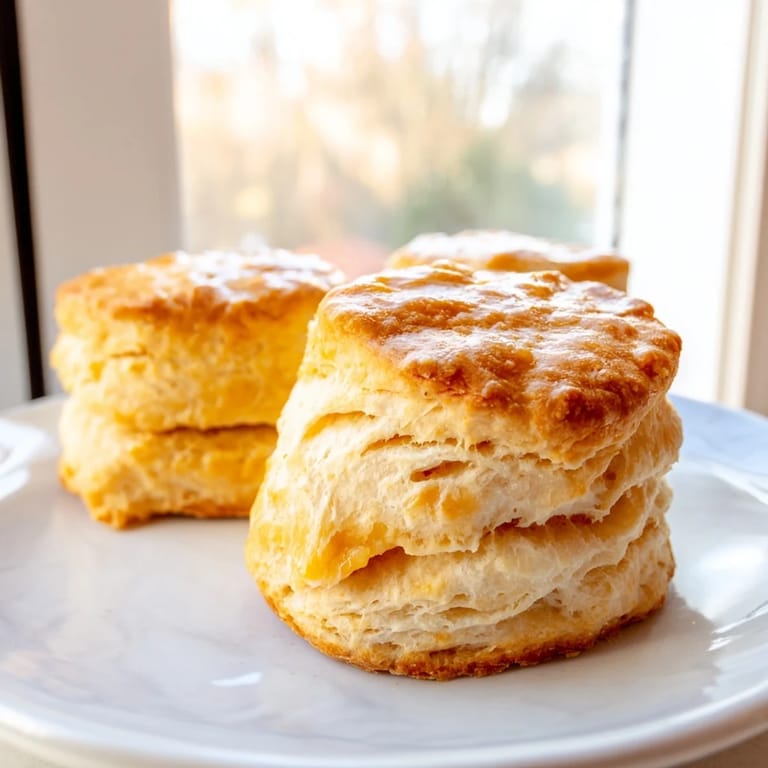
Save My grandmother used to say that biscuit making was part science, part prayer, and mostly about keeping your hands cold. I didn't understand what she meant until that rainy Sunday morning when I stood in her tiny kitchen, watching her transform nothing more than flour, butter, and buttermilk into the tallest, goldenest biscuits I'd ever seen. She'd been making them for fifty years by then, moving with that unhurried confidence that comes from thousands of breakfasts. That morning changed everything about how I approach baking.
Last winter, my sister came over unexpectedly after a rough week at work. I threw these biscuits together while she sat at my counter, wrapped in a blanket, watching the snow fall outside my kitchen window. When they came out of the oven, she took that first bite and actually closed her eyes, the steam rising from the split biscuit curling around her face. We ate them standing right there, burning our fingers slightly, not even bothering with plates or butter. Some meals just feel like a hug.
Ingredients
- All purpose flour: The protein structure here gives biscuits their rise while keeping them tender
- Baking powder and baking soda: This dual leavening combination ensures the biscuits get tall and stay tender
- Fine sea salt: Salt balances sweetness and enhances all the flavors, so don't skip it
- Granulated sugar: Just enough to help with browning and complement the butter flavor
- Cold unsalted butter: Cold butter creates those flaky layers as it melts in the oven, creating steam pockets
- Cold buttermilk: The acidity activates the baking soda and adds tanginess while keeping dough tender
Tired of Takeout? 🥡
Get 10 meals you can make faster than delivery arrives. Seriously.
One email. No spam. Unsubscribe anytime.
Instructions
- Preheat and prepare your baking surface:
- Get your oven to 220°C with the rack in the center, and line a baking sheet with parchment paper so nothing sticks.
- Mix the dry ingredients:
- In a large bowl, whisk together the flour, baking powder, baking soda, salt, and sugar until they're evenly combined.
- Cut in the cold butter:
- Add the cubed butter and work it quickly with a pastry cutter or your fingertips until you see coarse crumbs with some pea sized butter chunks still visible.
- Add the buttermilk:
- Pour the cold buttermilk into the center well and stir gently with a fork just until the dough comes together.
- Layer the dough:
- Turn the dough onto a floured surface, pat into a rectangle, fold in half, and repeat two more times to create flaky layers.
- Cut and arrange the biscuits:
- Pat the dough to 2.5 cm thickness, cut straight down with a round cutter, and place the biscuits close together on the baking sheet.
- Bake until golden:
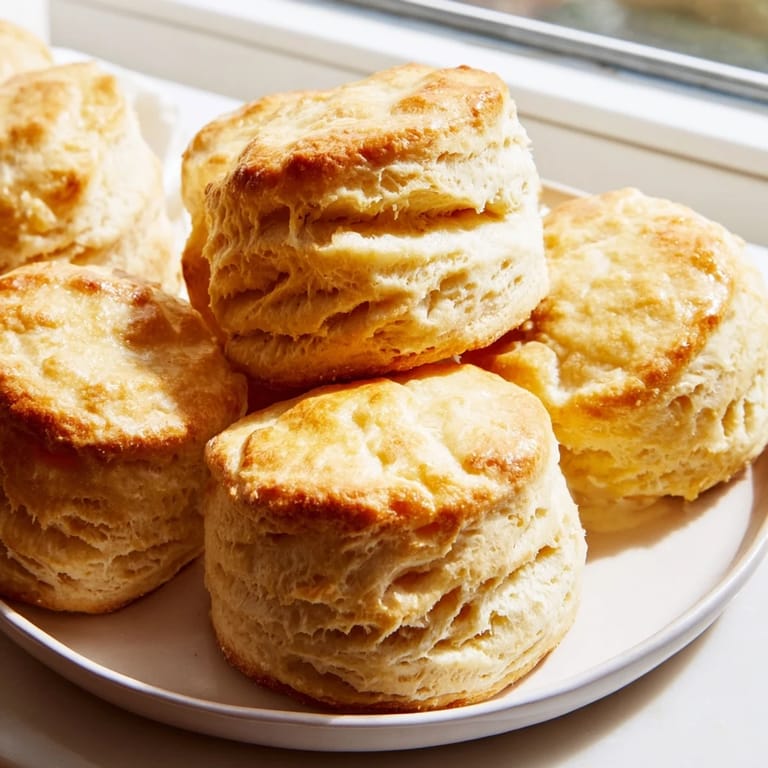
- Brush tops with buttermilk and bake for 13 to 15 minutes until tall and deeply golden brown on top.
 Save
Save These biscuits became my go to contribution for family gatherings after the year I volunteered to bring rolls for Thanksgiving and accidentally served hockey pucks instead. The following year, I practiced this recipe every weekend until I could make them in my sleep. Now my cousins specifically request them, and my grandmother would finally approve.
Working With The Dough
The dough will feel slightly shaggy and might look a bit messy when you turn it out onto the counter. This is exactly how it should look. If it feels too sticky to handle, dust your hands lightly with flour, but resist adding more flour to the dough itself. Those visible butter chunks you're worried about are actually the secret to creating beautiful layers as the butter melts and releases steam in the oven.
Getting The Height Right
Placing biscuits close together on the baking sheet helps them rise taller because they support each other as they bake. If you prefer crispy sides on all sides, space them further apart. For the tallest biscuits, aim to place them almost touching, and make sure your oven is fully preheated before they go in.
Make Ahead And Storage
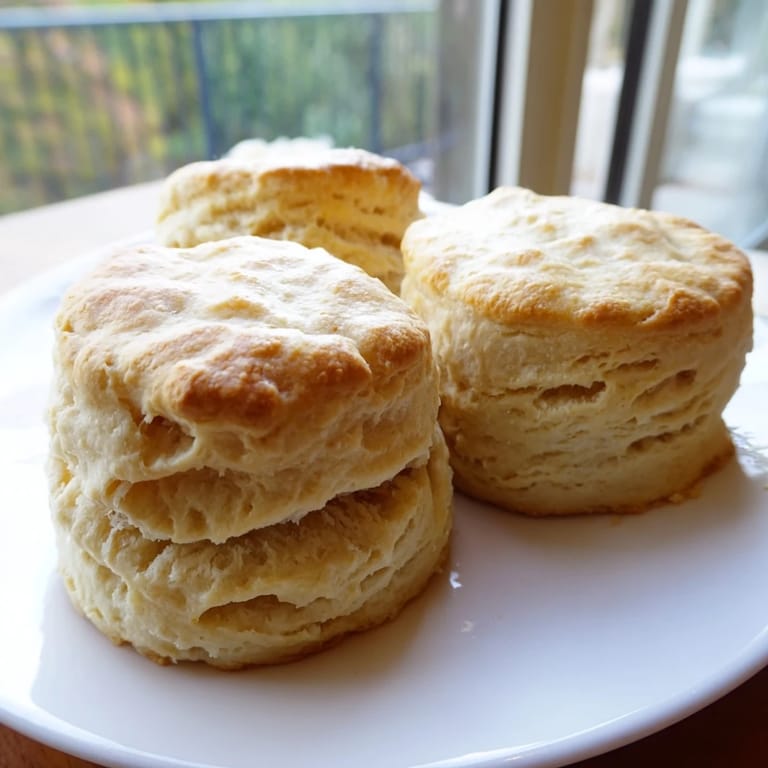
You can cut the biscuits and freeze them unbaked on a parchment lined baking sheet, then transfer to a bag once frozen. Bake from frozen, adding a few extra minutes to the cooking time. Leftover baked biscuits can be wrapped tightly and frozen for up to three months, then warmed in a 180°C oven until heated through.
- Brush frozen unbaked biscuits with buttermilk right before baking for the best color
- Wrap cooled biscuits in foil before freezing to prevent freezer burn
- Reheat day old biscuits in a 180°C oven for about 5 minutes to refresh them
 Save
Save There's something profoundly satisfying about pulling a tray of homemade biscuits from the oven, watching the steam rise off their golden tops. Make them once, and you'll understand why this recipe earned a permanent place in your kitchen rotation.
Recipe FAQs
- → Why must the butter and buttermilk be cold?
Cold butter creates small pockets of fat that melt during baking, producing flaky layers. Warm butter blends into the flour, resulting in denser biscuits. Keep ingredients chilled until ready to mix.
- → Can I make these ahead of time?
Yes! Cut the unbaked biscuits and freeze them on a baking sheet. Once frozen, transfer to a bag and store for up to 3 months. Bake from frozen, adding 2-3 minutes to the baking time.
- → Why should I avoid twisting the cutter?
Twisting seals the edges, preventing proper rising during baking. Press straight down and lift up cleanly to create open sides that allow the biscuits to achieve maximum height and flakiness.
- → What's the best buttermilk substitute?
Combine ¾ cup regular milk with 2 teaspoons lemon juice or white vinegar. Let it sit at room temperature for 5-10 minutes until thickened and slightly curdled. This homemade version works beautifully.
- → How do I get extra tall biscuits?
Place the cut biscuits close together on the baking sheet, almost touching. This encourages them to rise upward rather than outward. Also avoid overworking the dough, and handle it gently to preserve those delicate layers.