 Save
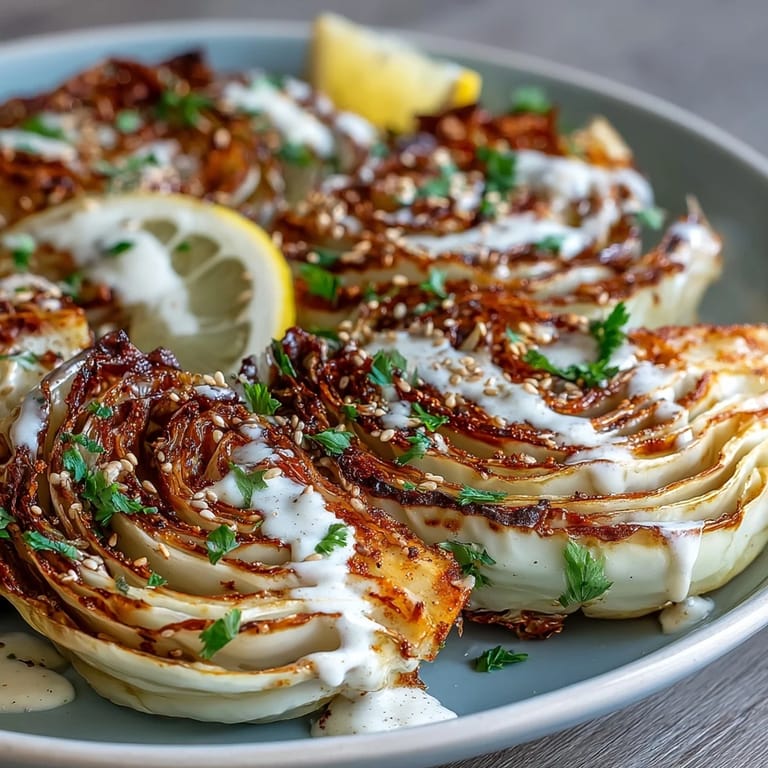
Save I discovered roasted cabbage steaks completely by accident one autumn evening when my farmer's market haul included a massive head of cabbage I wasn't sure how to use. Instead of the usual slaw, I sliced it thick, threw it in a hot oven with olive oil and spices, and walked away. Twenty minutes later, the kitchen smelled like caramelized sweetness and toasted cumin, and I realized I'd stumbled onto something genuinely special. That first bite, golden-edged and tender with a tahini drizzle, felt like an unexpected gift.
Last winter, I made this for a potluck where everyone was bringing complicated dishes, and I showed up with roasted cabbage steaks thinking it might get overlooked. Instead, people kept coming back for thirds, asking what was in that creamy sauce and why the cabbage tasted like caramel. That's when I understood this recipe's quiet power—it doesn't need to be trendy or complicated to matter.
Ingredients
- 1 large green cabbage: Choose one that feels dense and heavy for its size, with tight, unblemished leaves that signal freshness and flavor.
- 3 tbsp olive oil: Use good quality if you have it—the oil gets absorbed by the cabbage and contributes real flavor as it caramelizes.
- 1 tsp ground cumin: This is the secret that makes people pause mid-chew wondering what they're tasting; don't skip it or substitute.
- 1 tsp smoked paprika: The smokiness deepens as the cabbage roasts, adding a subtle warmth that lingers on your palate.
- ½ tsp garlic powder: This distributes evenly across the surface and infuses every bite without any harsh raw edges.
- Salt and freshly ground black pepper: Taste as you go because cabbage's sweetness needs salt to fully emerge.
- ⅓ cup tahini: Raw tahini works best here—it whips into a luxurious cream that coats the roasted cabbage like silk.
- 2 tbsp freshly squeezed lemon juice: Fresh matters deeply; bottled juice tastes tinny and misses the bright, cutting quality you need.
- 1 small garlic clove, finely minced: Mince it small so it dissolves into the tahini rather than sitting in little bits.
- 2–4 tbsp cold water: This thins the sauce gradually—start with 2 tablespoons and add more only if needed, whisking between additions.
- 2 tbsp chopped fresh parsley: Add it right before serving so it stays vibrant green and doesn't wilt into the warm cabbage.
- 2 tbsp toasted sesame seeds (optional): Toast them yourself if possible; the nutty fragrance they release is worth the extra two minutes.
- Lemon wedges: Serve these alongside for people who want more brightness and acidity than the drizzle provides.
Tired of Takeout? 🥡
Get 10 meals you can make faster than delivery arrives. Seriously.
One email. No spam. Unsubscribe anytime.
Instructions
- Heat your oven with intention:
- Set it to 425°F and give it a solid 10 minutes to preheat completely. Line a baking sheet with parchment paper so the cabbage doesn't stick and everything releases cleanly.
- Cut your cabbage into thick, sturdy steaks:
- Remove any yellowed outer leaves, then slice from top to root into 1-inch rounds. Aim for 4 to 5 steaks depending on your cabbage's size; thinner slices will dry out, thicker ones won't caramelize properly.
- Dress the cabbage like you mean it:
- Lay the steaks flat on your baking sheet, brush both sides generously with olive oil, then sprinkle the cumin, smoked paprika, garlic powder, salt, and pepper across both surfaces. Don't be shy—these seasonings dissolve into the cabbage as it roasts.
- Roast until the edges turn bronze and crispy:
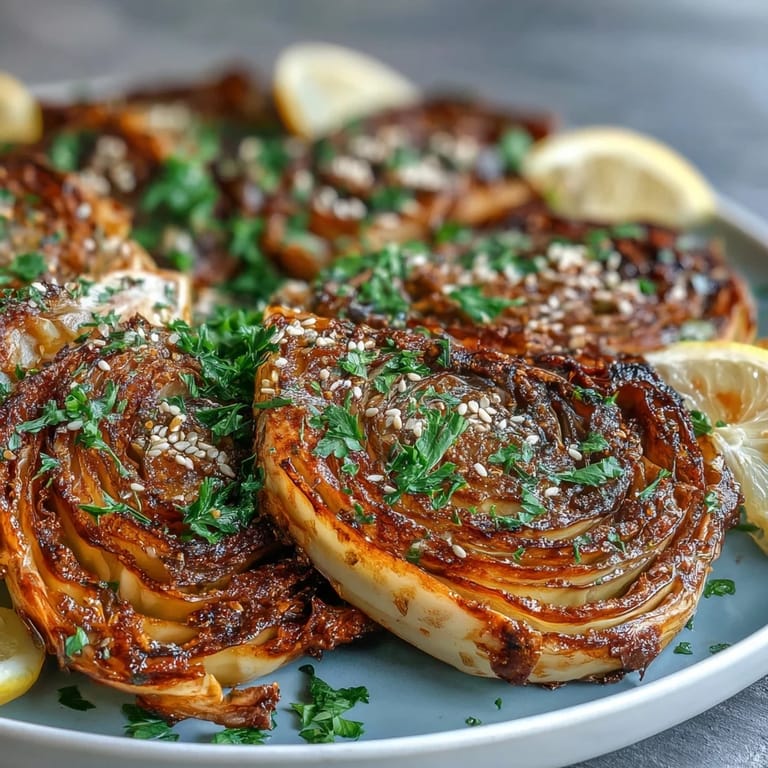
- This takes 25 to 30 minutes total. Flip the steaks halfway through so they develop color on both sides. You'll know they're ready when the outer leaves look almost burnt and the centers yield to a fork.
- Whisk the tahini sauce while cabbage finishes cooking:
- In a bowl, combine tahini, lemon juice, minced garlic, and a pinch of salt. Whisk vigorously, then add cold water one tablespoon at a time, whisking between additions until the sauce flows like heavy cream. It should coat the back of a spoon but still pour smoothly.
- Plate your cabbage with confidence:
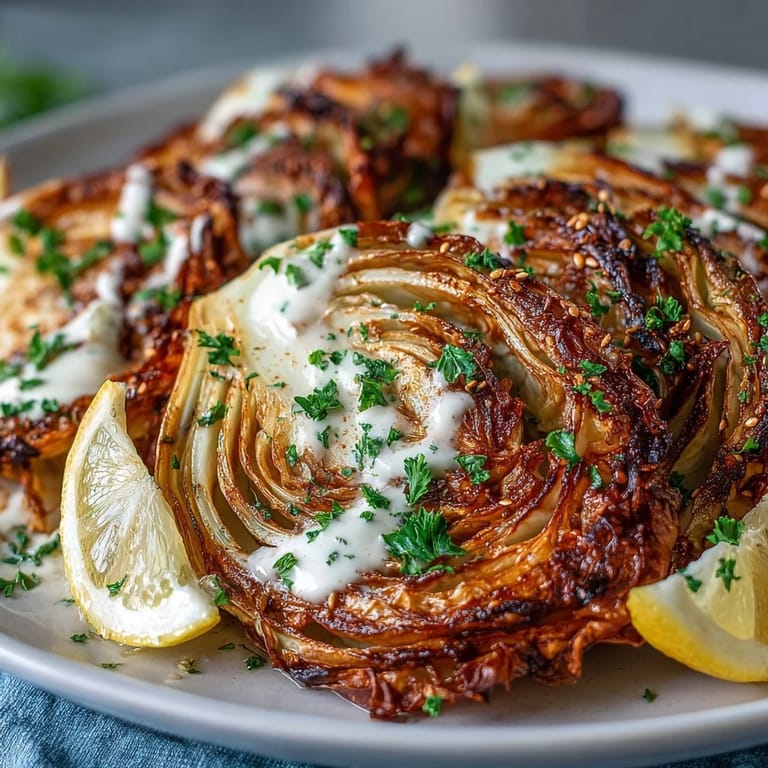
- Transfer the roasted steaks to a platter or individual plates, then drizzle the tahini sauce generously over and around them.
- Finish with brightness and texture:
- Scatter the fresh parsley across the top, sprinkle sesame seeds if using, and tuck lemon wedges alongside. Serve while the cabbage is still warm so the sauce soaks in.
 Save
Save There's a moment that happens every time I make this dish: someone takes the first bite, pauses, and asks if it's really just cabbage. That small moment of surprise, followed by genuine pleasure, is why this recipe lives in my regular rotation. It proves that the simplest ingredients, treated with intention and decent seasoning, can create something that feels far more elaborate than it actually is.
The Magic of Caramelization
Roasting cabbage transforms its chemistry entirely. The high heat breaks down the vegetable's cell walls, concentrating its natural sugars until they caramelize into something rich and almost nutty. This is why boiled or steamed cabbage tastes so different—it never gets the chance to develop that depth of flavor. The dark, crispy edges aren't burnt mistakes; they're where the most intense sweetness hides.
Building the Perfect Tahini Sauce
Tahini can feel intimidating because it's finicky about water temperature and whisking technique. Cold water matters because it prevents the sesame paste from seizing and breaking into a grainy mess. The lemon juice serves triple duty: it thins the sauce, brightens the earthiness of tahini, and adds acidity that cuts through the richness of the roasted cabbage. Garlic whisked into tahini stays smooth and integrated rather than bitey and raw.
Variations and Personal Touches
This recipe has a strong backbone, but it also welcomes improvisation. I've added sumac for extra tang, swapped the tahini for a garlicky yogurt sauce when I had guests who weren't vegan, and once tossed the roasted cabbage with crispy chickpeas to make it more substantial as a main course. The cumin-paprika base stays constant because it's what makes these steaks recognizable, but everything else is fair game.
- A pinch of chili flakes or Aleppo pepper will add heat if your table enjoys spice without overwhelming the dish.
- Serve these alongside grain bowls, with grilled proteins, or as a standalone main with bread and a bright salad.
- Leftovers keep in the refrigerator for three days, though the cabbage softens and the sauce separates slightly when cold.
 Save
Save This dish quietly proves that plant-based cooking doesn't require exotic ingredients or complicated techniques. Some of my favorite meals have come from working with what I have and treating it generously.
Recipe FAQs
- → How do I cut cabbage into steaks?
Remove any tough outer leaves, then slice the whole head crosswise into 1-inch thick rounds. You'll typically get 4-5 steaks from one large cabbage. Keep the core intact to help each slice hold its shape during roasting.
- → Can I make this ahead of time?
Roast the cabbage steaks up to a day in advance and reheat at 400°F for 10 minutes. Store the tahini drizzle separately in the refrigerator and whisk in a splash of water before serving to restore the creamy consistency.
- → What can I serve with roasted cabbage?
These steaks pair beautifully with quinoa, couscous, or warm flatbread. They also complement grilled chicken, lamb, or fish. Add a simple green salad with lemon vinaigrette to complete the meal.
- → Why did my tahini seize up?
Tahini naturally thickens when first mixed with lemon juice. Simply whisk in cold water one tablespoon at a time until the sauce becomes smooth and pourable. The texture should resemble heavy cream.
- → Can I use red cabbage instead?
Absolutely. Red cabbage works well and adds vibrant purple color to the dish. Note that red cabbage may take slightly longer to become tender and the cooking liquid will turn a striking magenta color.
- → How do I get the best caramelization?
Don't overcrowd the baking sheet—give each steak space. Use a hot oven at 425°F and flip halfway through cooking. The natural sugars in cabbage will create deep, golden-brown edges with sweet, concentrated flavor.