 Save
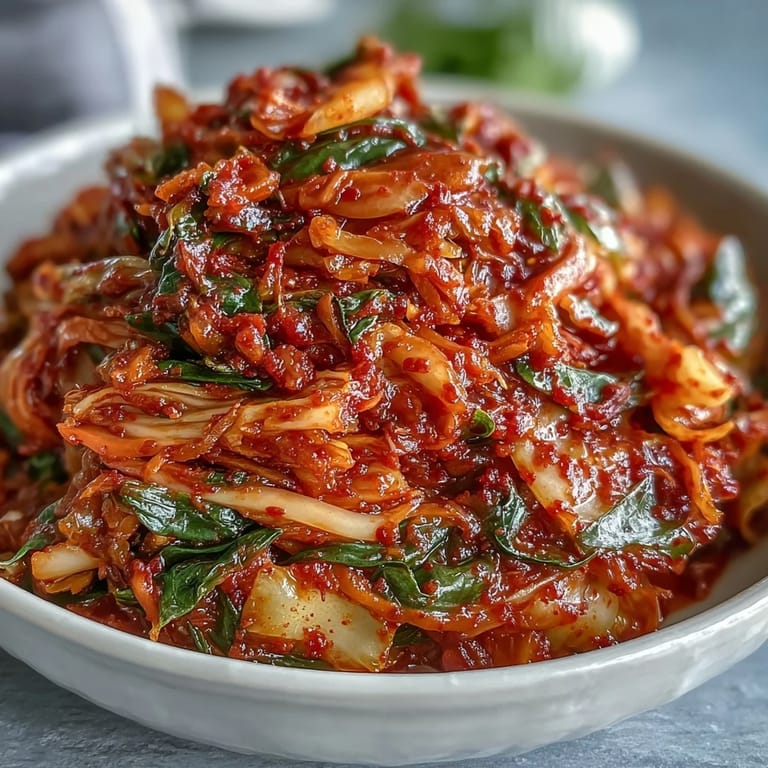
Save The first time my neighbor handed me a jar of her homemade kimchi, I was skeptical about the whole fermentation thing. But one spoonful changed everything, and suddenly I understood why she'd been raving about it for months. That tangy heat, the crisp bite of cabbage, the umami depth from garlic and ginger, it all clicked. Now I make batch after batch, and honestly, the kitchen smells incredible when the fermentation is happening, like something alive and transforming in those jars.
I'll never forget bringing kimchi to a potluck and watching people reach for it again and again, even those who claimed they didn't like spicy food. One friend ate it straight from the jar while standing in my kitchen, and that's when I knew I'd cracked the code. It became the side dish people actually asked about instead of politely pushing around their plates.
Ingredients
- Napa cabbage: The spine of this whole operation, and its crinkled leaves are perfect for holding onto that spice paste.
- Daikon radish: Adds a sharp, clean crunch that balances the richness of garlic and fish sauce.
- Scallions: Fresh and subtle, they prevent the kimchi from becoming one-note.
- Carrot: Optional but worth it for both color and a hint of natural sweetness.
- Coarse sea salt: This initial brining step is non-negotiable, it creates the foundation for good fermentation.
- Garlic and ginger: The dynamic duo that makes everything taste like home, use fresh and don't skimp.
- Korean red chili flakes: Gochugaru is the soul of kimchi, its fruity heat is completely different from cayenne or regular red pepper flakes.
- Fish sauce: Trust it, even though it smells funky in the jar, it creates that deep umami magic.
- Rice flour: This creates a slurry that helps the spice paste coat everything evenly and adds body.
Tired of Takeout? 🥡
Get 10 meals you can make faster than delivery arrives. Seriously.
One email. No spam. Unsubscribe anytime.
Instructions
- Prep Your Cabbage:
- Quarter that napa cabbage lengthwise, then chop it into 2-inch pieces so you've got manageable chunks. You want them big enough to retain some texture but small enough that the brine can penetrate.
- Brine and Soften:
- Mix your sea salt with cold water in a huge non-reactive bowl, then submerge the cabbage completely. Weight it down with a plate and something heavy, then let it sit for 2 hours, tossing every 30 minutes so it brines evenly. You'll watch the cabbage transform from rigid to supple, and that's exactly what you're going for.
- Rinse Thoroughly:
- This is where people rush and regret it, so take your time rinsing the cabbage under cold water at least twice, sometimes three times, until the water runs clear and it doesn't taste aggressively salty. Drain it really well in a colander.
- Make the Spice Paste Base:
- Whisk rice flour with 150 ml water in a small saucepan over medium heat, stirring constantly until it thickens into something that looks like thin pudding, about 1 to 2 minutes. Let it cool completely because hot paste will be impossible to work with.
- Blend the Aromatics:
- Combine your cooled rice paste, minced garlic, minced ginger, chopped onion, fish sauce, and sugar in a blender and blend until it's completely smooth. Stir in your gochugaru to taste, starting with 3 tablespoons and adding more if you want serious heat.
- Coat Everything:
- In a large bowl, toss together your drained cabbage, julienned daikon, sliced scallions, and carrot if you're using it. Pour the spice paste over everything and put on your kitchen gloves, then massage like you mean it, getting every piece coated with that fiery red mixture. This is oddly satisfying and you'll know you're done when everything is evenly colored.
- Pack the Jars:
- Transfer your kimchi into clean glass jars, pressing down firmly as you go to eliminate air pockets and keep everything submerged under its own liquid. Leave at least an inch of headspace at the top because fermentation creates gas and you don't want explosions.
- Ferment and Monitor:
- Seal your jars and leave them at room temperature, away from direct sunlight, for 1 to 2 days. Open the lids daily to let gas escape, kind of like burping a baby, and you'll hear that satisfying hiss each time.
- Refrigerate and Enjoy:
- After 48 hours, taste it, and once it's hit that perfect balance of tangy and spicy for you, move it to the refrigerator. It'll continue fermenting slowly and developing complexity for weeks, so it only gets better.
 Save
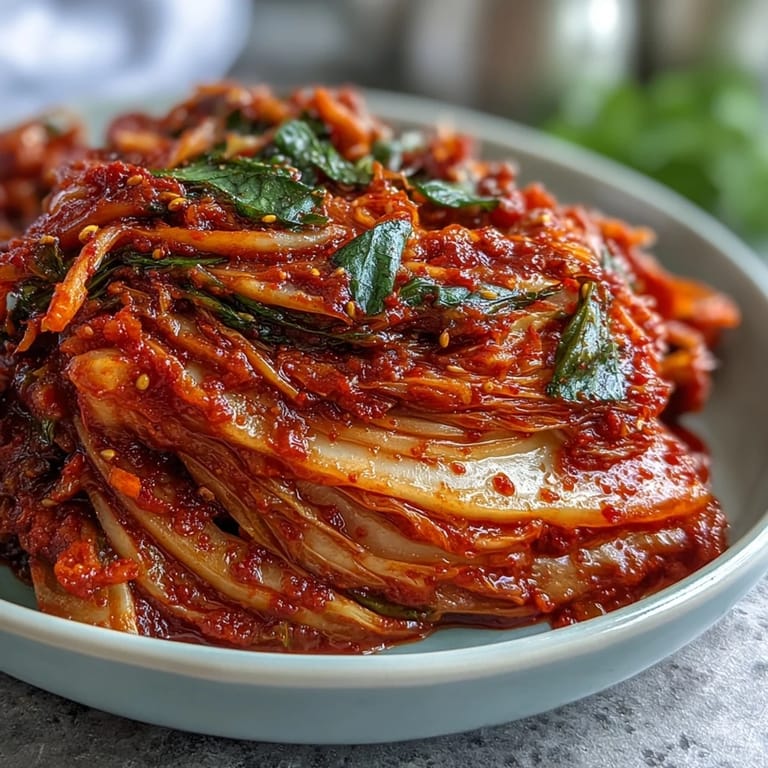
Save There's something almost sacred about the moment you open that jar after a few days and see the bubbles, smell that intoxicating sour funk. My partner called it my weird vegetable science experiment, but when he started sneaking bites straight from the container, I knew the kimchi had won him over too.
Flavor Balance and Heat Levels
Getting the heat level right is personal, and honestly the first batch teaches you more than any recipe can. I learned this when I made an aggressively spicy version that cleared my sinuses just standing near the fridge, so now I start conservative with 3 tablespoons of gochugaru and taste as I go. If you want it milder, you can also add a grated apple or pear to the spice paste for sweetness that softens the chili bite.
Fermentation Timing and Temperature
Room temperature matters more than you'd think, warmer kitchens ferment faster while cooler ones take longer. During summer my kimchi is ready in 24 hours, but in winter it might need a full week. The magic is tasting it regularly and trusting your palate over any timeline, because fermentation is living and breathing, not a timer.
Serving Suggestions and Storage
Kimchi isn't just a side dish, it's a condiment that transforms everything it touches. Mix it into rice bowls, use it as a topping for eggs, add it to soups at the last second, or eat it straight because sometimes that's exactly what you need. Store it in the refrigerator where it'll happily develop deeper flavors for weeks, and those jars of kimchi in your fridge become a badge of honor among friends.
- Pair it with crisp lager or dry Riesling if you're feeling fancy about it.
- The liquid left in the jar is liquid gold, use it as a marinade or salad dressing.
- Always use clean utensils when scooping out kimchi so you don't introduce unwanted bacteria into the jar.
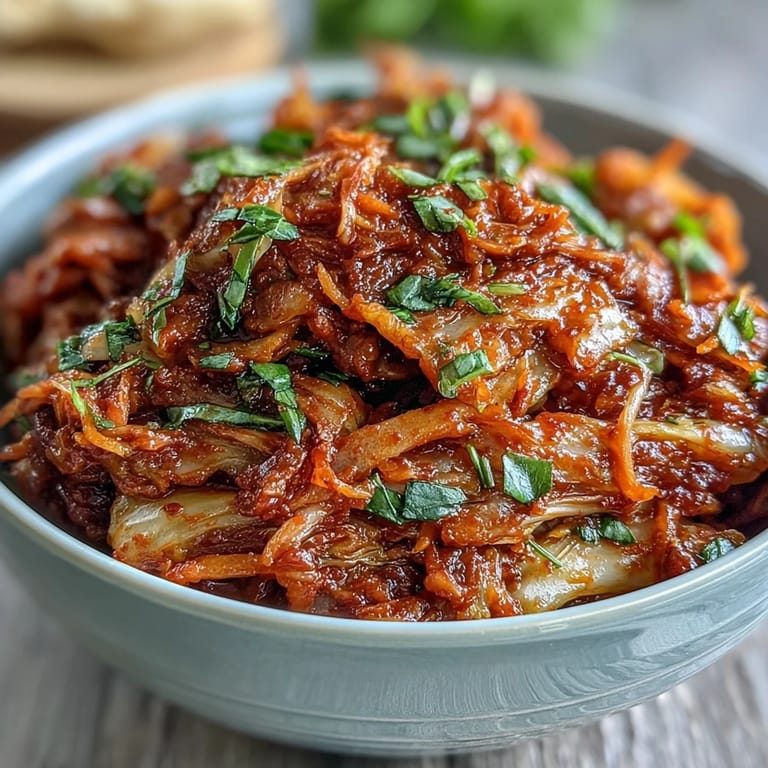 Save
Save Making kimchi from scratch is one of those kitchen skills that feels like alchemy but is actually just bacteria doing what it's been doing for centuries. Every jar you open becomes proof that good things happen when you give time, salt, and intention the space to work their magic.
Recipe FAQs
- → How long should kimchi ferment?
Allow kimchi to ferment at room temperature for 1-2 days, tasting after 48 hours. Once the tanginess reaches your preferred level, transfer to refrigeration. The cold slows fermentation while flavors continue developing depth over several weeks.
- → Can I make kimchi vegan?
Replace traditional fish sauce with soy sauce or vegan fish sauce alternatives. This substitution maintains the salty umami foundation while keeping the dish entirely plant-based. The fermentation and spice balance remain unchanged.
- → What makes kimchi spicy?
Korean red chili flakes called gochugaru provide the signature heat and vibrant red color. Adjust between 3-5 tablespoons depending on your spice tolerance. For milder versions, incorporate grated apple or pear into the spice paste to temper the fire.
- → Why rinse the salted cabbage?
Thorough rinsing removes excess salt that would otherwise overwhelm the final flavors. After the two-hour salting process, cabbage releases water and becomes pliable. Two to three cold water rinses ensure the perfect seasoning balance for fermentation.
- → What is the rice flour for?
Cooked rice flour creates a smooth base that helps the spice paste adhere evenly to all vegetable surfaces. Whisked with water and thickened over medium heat, this gluten-free binder ensures consistent flavor distribution throughout every batch.
- → How do I know when kimchi is ready?
Your kimchi is ready when it tastes pleasantly sour and tangy with a satisfying crunch. The aroma should be distinctly fermented without unpleasant off-odors. Visual cues include bubbles forming and liquid becoming slightly cloudy as beneficial bacteria thrive.