 Save
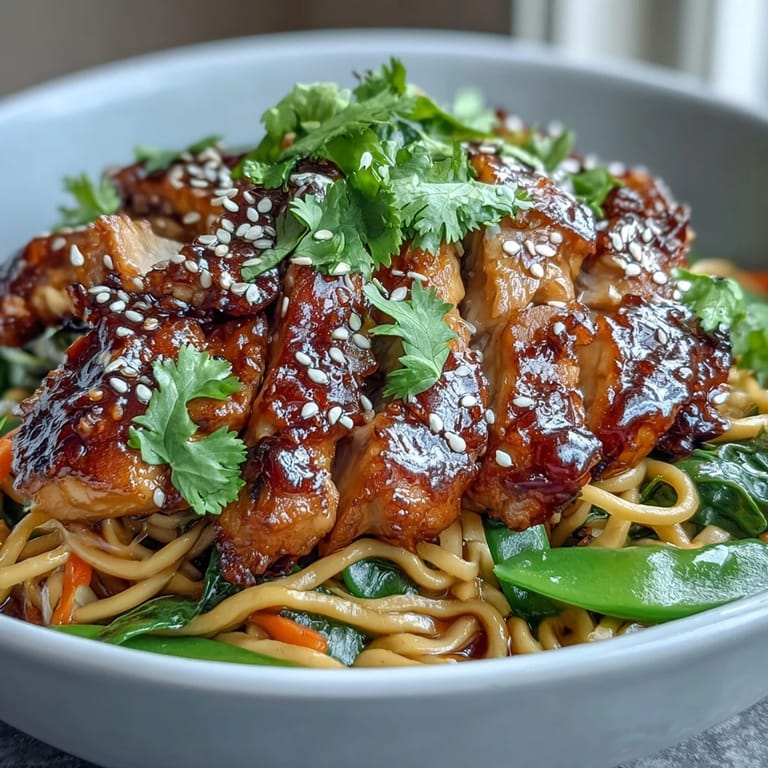
Save One Tuesday evening, I was standing in my kitchen feeling completely uninspired about dinner when my neighbor stopped by with a bag of fresh ginger and snap peas from her garden. That simple gesture sparked this sesame chicken noodle bowl, which has since become the dish I make when I need something that feels both comforting and exciting. There's something almost meditative about the way the sesame oil perfumes the air as everything comes together in one pan. What started as improvisation has turned into a weeknight favorite that somehow tastes like you spent hours on it, even though it doesn't.
I made this for my sister during a rainy Saturday when she showed up unannounced with takeout plans that fell through. As the sesame aroma filled the kitchen, she sat at the counter and actually put her phone down, asking questions about the ginger and why the noodles needed to be rinsed. By the time we sat down to eat, something shifted in the room—it stopped being about solving dinner and became about slowing down together.
Ingredients
- Boneless, skinless chicken breast or thighs, thinly sliced: Thighs stay more forgiving if you're nervous about overcooking, but breasts work beautifully if you slice them thin and don't walk away from the pan.
- Dried udon, soba, or rice noodles: Use whatever you have on hand, though udon gives the most satisfying chew and holds the sauce like it was made for this moment.
- Red bell pepper, thinly sliced: The color matters here, not just for looks but because it adds a gentle sweetness that plays against the umami.
- Medium carrot, julienned: A vegetable peeler creates ribbons faster than a knife, and the thinner they are, the better they absorb the sauce.
- Sugar snap peas, trimmed: Buy them a day ahead and they actually taste sweeter as they sit in your crisper drawer.
- Spring onions, sliced: Keep the green tops separate and scatter them on at the very end so they stay bright and slightly raw.
- Low-sodium soy sauce: Low-sodium lets you taste the ginger and garlic instead of just salt.
- Brown sugar: Light brown works, but dark brown whispers hints of molasses that linger beautifully.
- Toasted sesame oil: This one ingredient makes everything taste intentional—use it sparingly because it's potent and precious.
- Rice vinegar: The gentle acidity keeps everything balanced and stops the dish from feeling one-note.
- Fresh ginger, grated: Grating it yourself releases oils that jarred ginger simply can't match.
- Garlic, minced: Fresh always, because this deserves better than the jar.
- Cornstarch (optional): Add it if you want a glossy sauce that clings to everything, skip it if you prefer things loose and pourable.
- Toasted sesame seeds: Buy them already toasted because they're fragile and precious.
- Fresh coriander or cilantro, chopped: The brightness at the end matters more than you'd expect.
- Lime wedges (optional): A squeeze of lime is like pulling back a curtain and letting light flood in.
Tired of Takeout? 🥡
Get 10 meals you can make faster than delivery arrives. Seriously.
One email. No spam. Unsubscribe anytime.
Instructions
- Cook the noodles first:
- Follow the package, but taste them at the earliest moment they suggest—you want them tender but with just a whisper of resistance. Rinsing them under cold water stops them from clumping and cools them down so they don't get mushy when they hit the hot pan later.
- Build your sauce while noodles cook:
- Whisk everything together in a small bowl and let it sit for a minute so the sugar starts to dissolve. This is the moment where you're free to adjust—need it sweeter, add a pinch more brown sugar; want heat, crack some red pepper flakes into it.
- Get your pan screaming hot:
- Medium-high heat, a splash of oil that shimmers and moves around the pan, and you're ready. The sizzle when the chicken hits is your signal that everything's about to work.
- Sear the chicken until it's golden:
- Don't fidget with it for the first minute—let it sit and develop color and flavor. Four to five minutes and it should be cooked through with edges that look intentional, not pale.
- Stir-fry the vegetables with intention:
- They should still have snap when you taste them, not be soft and apologetic. Two to three minutes gets you there, and the pan's heat does most of the work if you let it.
- Bring everything back together:
- Chicken returns, sauce gets poured, and watch as it glistens and thickens slightly. Toss everything with tongs or a spatula like you're gently encouraging it all to get along.
- Add noodles and spring onion tops:
- The noodles bring everything down in temperature slightly, so you're really just bringing it all back to warmth and making sure the sauce coats every strand. The spring onion tops stay mostly raw, just kissed by the heat.
- Serve with ceremony:
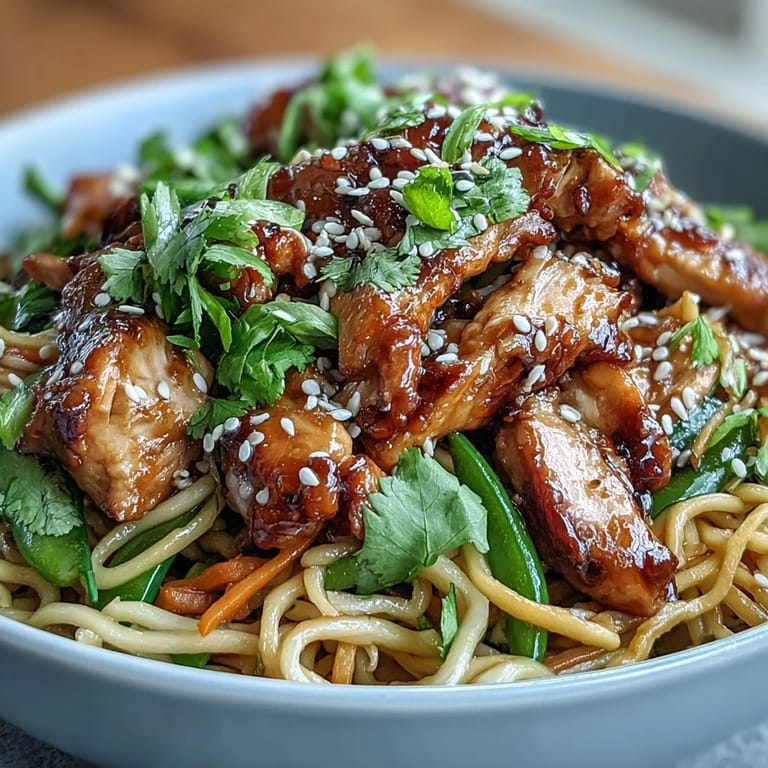
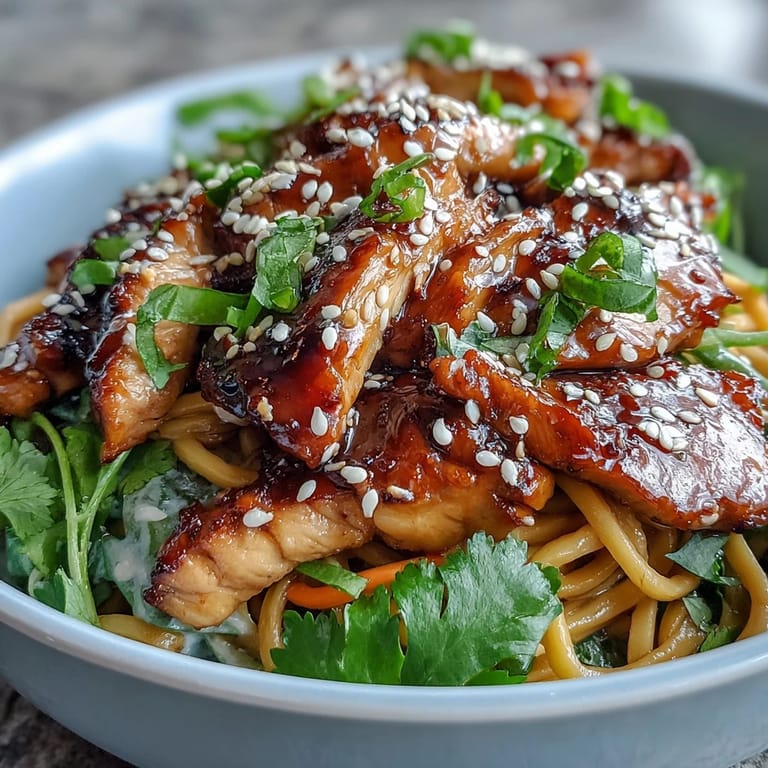
- Divide among bowls, scatter sesame seeds like you mean it, add cilantro for color, and set down lime wedges so people can adjust the brightness to their taste.
 Save
Save This bowl has become the meal I make when someone I love needs feeding, whether they're celebrating something or just recovering from a long week. There's something about a warm bowl of noodles and vegetables and sauce that says I'm thinking of you without being heavy-handed about it.
Why This Bowl Works Every Time
The real genius of this dish is in the balance—sweet and salty, soft and crisp, hot and cool all happening in the same spoon. The sesame oil does most of the heavy lifting, transforming simple ingredients into something that tastes like it belongs in a restaurant. But what keeps me making it is how forgiving it is, how it bends to whatever vegetables are in my crisper drawer and whatever mood I'm in when I start cooking.
Making It Your Own
This recipe is honestly a launching pad more than a rulebook. I've made it with broccoli in winter when the garden's asleep, with mushrooms when I'm being vegetarian for a week, with extra ginger when I need comfort. The sauce stays the same and everything still works because the fundamentals are sound. That brown sugar and sesame oil and ginger will carry whatever vegetables you throw at them, and the noodles are just there to soak it all up.
Small Details That Matter More Than They Should
The difference between good and genuinely craveable is often just intention in the small moments. Grating your own ginger instead of using jarred, toasting your sesame seeds if they aren't already, tasting the sauce before it hits the pan—these aren't extra steps, they're the places where flavor lives. I've learned that the vegetables matter less than their size and texture; thin slices cook faster and soak up sauce better than chunks ever could. And the lime wedge at the end isn't optional the way the recipe suggests—it's the final brightness that makes everything sing.
- Slice your chicken thin so it cooks fast and stays tender, not thick chunks that need longer and risk drying out.
- Taste the sauce as you're building it because everyone's soy sauce bottle is a little different and some are saltier than others.
- Don't skip the ice bath for your noodles because they'll keep cooking in their own heat and turn into mush otherwise.
 Save
Save This bowl has taught me that sometimes the simplest meals are the ones people remember, the ones they ask you to make again. It's the kind of dish that proves you don't need complicated techniques or a million ingredients to make something worth sitting down for.
Recipe FAQs
- → Can I use other types of noodles?
Yes, udon, soba, or rice noodles all work beautifully. Choose based on your preference or what's available. Rice noodles make it gluten-free when paired with tamari.
- → How do I store leftovers?
Store in an airtight container in the refrigerator for up to 3 days. Reheat gently in a skillet or microwave, adding a splash of water if needed to loosen the sauce.
- → Can I make this vegetarian?
Absolutely. Substitute the chicken with firm tofu cubes, pressed and pan-fried until golden. The sauce and vegetables remain the same for a delicious plant-based version.
- → How can I add more heat?
Add sliced fresh chili peppers during stir-frying or sprinkle red pepper flakes into the sauce. Sriracha or chili garlic paste also works well mixed into the sesame sauce.
- → What vegetables work best?
Bell peppers, carrots, and snap peas provide great crunch and color. Broccoli, mushrooms, bok choy, or snow peas are excellent additions or substitutions based on what you have on hand.