 Save
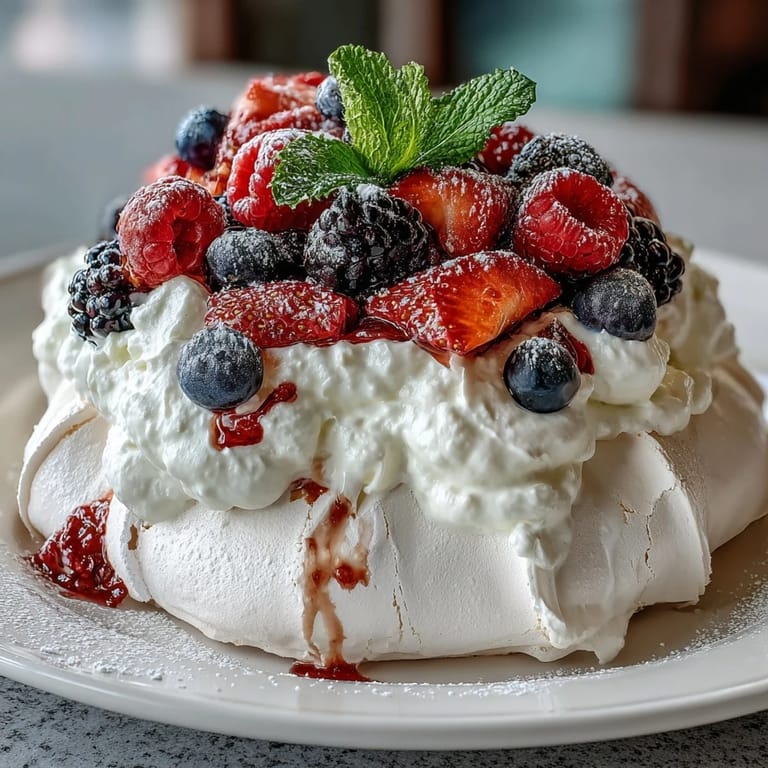
Save The first time I encountered pavlova, it wasn’t at a fancy dinner, but rather during a spontaneous spring picnic where someone pulled out a cloud-like dessert topped with berries and cream. Sunlight bounced off the glossy meringue, and the promise of a crisp exterior and pillowy center was impossible to resist. I remember the surprise of how such a fragile-looking treat held its shape, inviting everyone to lean in for a taste. It’s the kind of dish that quietly steals the show, even when surrounded by baskets of homemade cookies and fruit salads. Pavlova’s elegance hides its humble origins, and that discovery makes it all the more delightful.
Once, I made pavlova for a group of friends during a rainy afternoon, and the gentle hiss of beating egg whites and the sudden burst of laughter as the cream accidentally splattered reminded me how cooking breaks down barriers. The scent of vanilla warmed the kitchen, and we watched the meringue rise slowly, everyone amazed at how such basic ingredients could transform. Sharing slices, messy from overloaded berries, made for the perfect kind of dessert chaos. We forgot about the weather outside and focused on getting that perfect bite. It was more about the experience than the result, but the pavlova held its own.
Ingredients
- Egg whites: Using room temperature egg whites gives the meringue the right lift, and I found that any trace of yolk can ruin the peaks—so separate carefully.
- Superfine sugar: Fine sugar dissolves smoothly for a glossy meringue; I sometimes blitz regular sugar in the blender if I run out.
- Cornstarch: A teaspoon softens the center, creating that famous marshmallow texture.
- White vinegar: Just a splash stabilizes the egg whites, and I learned it also prevents sinking after baking.
- Vanilla extract: Adds floral undertones that make the dessert feel homemade.
- Heavy whipping cream: Cold cream whips faster and holds peaks—don’t skip chilling your bowl.
- Powdered sugar: A little sweetness here offsets the tartness of the berries.
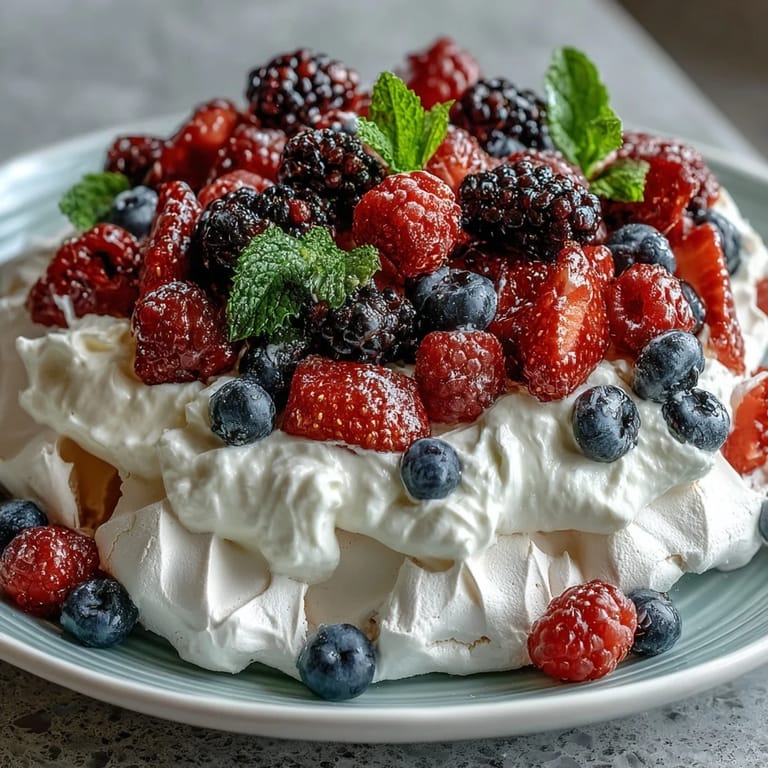
- Fresh berries: The combination of strawberries, blueberries, raspberries, and blackberries gives both color and tang—choose ripe and dry berries for less runny topping.
- Mint leaves (optional): These bring a cool aroma and burst of green—add last for maximum freshness.
Tired of Takeout? 🥡
Get 10 meals you can make faster than delivery arrives. Seriously.
One email. No spam. Unsubscribe anytime.
Instructions
- Prep the baking sheet:
- Lay parchment paper onto the baking sheet, and trace an 8-inch circle for guidance. Flip the paper so the pencil marks don’t touch the meringue.
- Beat the egg whites:
- Whisk your egg whites in a pristine bowl until soft peaks appear; the sound crackling against metal is a sign you’re on track.
- Add sugar slowly:
- Incorporate sugar one spoon at a time; watch for glossy, stiff peaks that hold if you tilt the bowl upside down.
- Finish the meringue:
- Gently fold in cornstarch, vinegar, and vanilla, being careful not to deflate the volume you’ve worked so hard for.
- Sculpt the pavlova:
- Spoon the meringue onto your guide, shaping it with slightly raised edges to cradle cream and berries later.
- Bake and cool:
- Bake for about 1 hour 15 minutes, then let it cool inside the oven with the door ajar to avoid cracking.
- Whip the cream:
- Use cold cream and a chilled bowl; beat until soft peaks that fall over gently, then add powdered sugar and vanilla.
- Top and serve:
- Transfer pavlova to the platter, spread cloud-like whipped cream over the center, and pile on your choice of berries and mint.
 Save
Save There was a moment after a long dinner where everyone was too full for dessert, but the pavlova’s delicate crunch and vibrant berries coaxed smiles and second helpings. Suddenly, conversation shifted to memories of holidays and favorite sweets, and the last slice disappeared before anyone realized. That day, pavlova felt like a connector, turning a simple meal into lasting joy. Even the crumbs signaled the end of a wonderful evening. It was more than just a treat—it became a centerpiece for laughter.
What I Learned About Whipped Cream
Trying to whip cream in a warm kitchen taught me that temperature is everything. If your bowl and beaters aren’t chilled, the cream refuses to thicken and can even turn grainy. I once had to start over, but now I stash everything in the fridge ahead of time for best results. Cold cream makes thicker, more luxurious peaks. This lesson saves time and avoids disappointment.
Troubleshooting the Meringue
The trickiest part is getting the egg whites to stiffen without deflating them. I learned not to rush the sugar addition—dumping it in too quickly gave me grainy meringue. On occasion, I used a metal bowl instead of glass, and the peaks seemed stronger and higher. Watching the meringue swirl until glossy is oddly satisfying. If it’s not shiny, keep whisking before moving on.
Serving Pavlova Without Stress
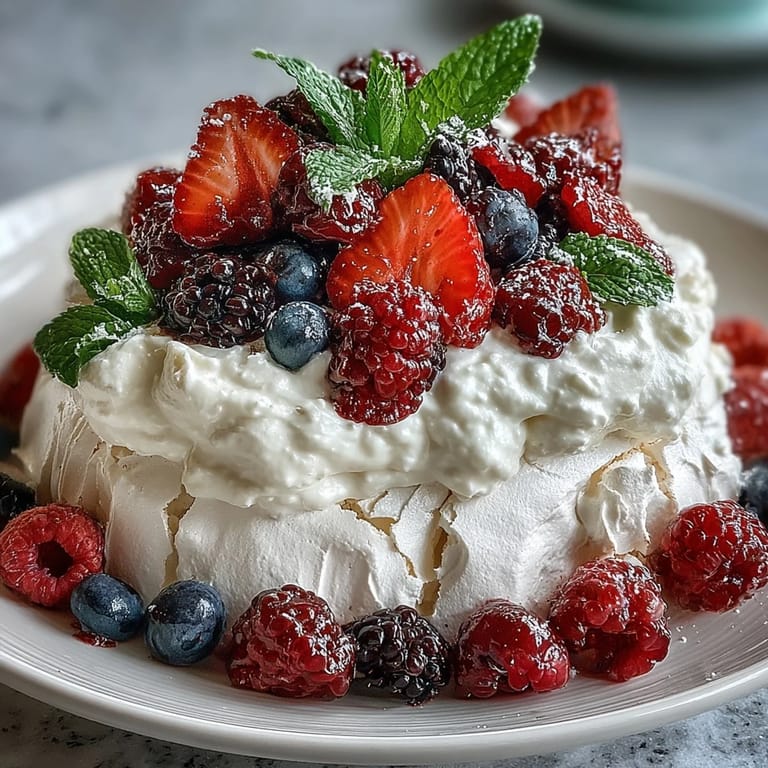
Assembly can look dramatic, but it doesn’t have to be intimidating. Keep berries dry so they don’t bleed into the cream, making the pavlova soggy. Slice gently using a serrated knife, and don’t worry if pieces are messy—they taste just as good. I like to sprinkle the mint at the very last moment for a touch of fragrance. Sharing pavlova is a joy, no matter how it looks.
- If the meringue cracks, cover with extra whipped cream and nobody will notice.
- Let people choose their berries for a fun serving experience.
- Save leftovers in the fridge, but eat within a day for peak texture.
 Save
Save With pavlova, there’s always something new to enjoy—whether it’s a crowd’s reaction or the play of flavors with each bite. It makes for a delightful dessert that turns any occasion into something special.
Recipe FAQs
- → What makes pavlova crisp on the outside?
Baking the meringue low and slow, then cooling in the oven, creates a crisp exterior and soft inside.
- → Can I use other fruits instead of berries?
Yes, you can substitute berries with seasonal fruits like kiwi, mango, or peaches for different flavors.
- → How do I prevent meringue from collapsing?
Use egg whites at room temperature, add sugar gradually, and avoid making on humid days for best stability.
- → Is pavlova gluten-free?
Yes, the ingredients are naturally gluten-free. Always check labels if allergies are a concern.
- → What’s the best way to serve pavlova?
Assemble just before serving to keep the meringue crisp and the topping fresh.
- → Can whipped cream be prepared ahead?
Whipped cream can be made a few hours ahead and kept chilled until ready to use.