 Save
Save There's something about the smell of chicken simmering with thyme that instantly transports me back to my grandmother's kitchen on gray afternoons. She'd have this exact pot bubbling away while we'd sit at her worn wooden table doing homework, the steam rising like a gentle promise that everything would be okay. One winter, I tried recreating it from memory alone—no recipe, just instinct—and somehow nailed it on the first try, which shocked us both. That's when I realized this soup wasn't about precision; it was about the comfort of knowing what comes next. Now whenever I make it, I'm not just cooking for myself, I'm cooking for that feeling.
I made this for my roommate during her first winter in the city, when she was feeling particularly homesick and overwhelmed. She watched the whole process from a barstool with her coat still on, and by the time I poured the first bowl, she was already tearing up a little. We sat on opposite ends of the couch, letting it cool just enough to eat, and she told me it tasted exactly like her mother's version. Sometimes food does that—it becomes a bridge across time and distance, reminding us we're not quite as alone as we feel.
Ingredients
- Chicken breasts: Boneless and skinless ones cook evenly and shred like silk, plus they keep the broth clean and light instead of greasy.
- Olive oil: A couple tablespoons is all you need to get your vegetables golden and fragrant without overwhelming the delicate flavors.
- Onion, carrots, and celery: This holy trinity creates the flavor foundation, and dicing them roughly equal sizes means everything finishes cooking at the same moment.
- Garlic: Fresh minced garlic is non-negotiable here—it blooms in the hot oil and becomes almost sweet, nothing like jarred.
- Long-grain white rice: Rinsing it first prevents mushiness and keeps each grain distinct even after simmering in broth.
- Chicken broth: Low-sodium is crucial because you're seasoning it yourself, and you want to taste the herbs, not just salt.
- Dried thyme and rosemary: These two herbs are the backbone—they're earthy and warming without ever tasting medicinal.
- Bay leaves: They add a subtle depth that you won't consciously notice but will definitely miss if they're not there.
- Fresh parsley: Stirred in at the end, it brings brightness and a gentle freshness that keeps the soup from feeling heavy.
- Lemon juice: A squeeze lifts everything at the last second, making you realize the whole bowl tastes more vibrant.
Tired of Takeout? 🥡
Get 10 meals you can make faster than delivery arrives. Seriously.
One email. No spam. Unsubscribe anytime.
Instructions
- Heat your oil and soften the vegetables:
- Warm olive oil in a large pot over medium heat, then add your diced onion, carrots, and celery. Let them sit for a few minutes before stirring, and you'll hear that gentle sizzle that means good things are happening. After about 5 to 6 minutes, they should be soft enough to yield slightly when you press them with your spoon.
- Wake up the spices:
- Stir in your minced garlic along with the thyme and rosemary, cooking for just 1 minute until your kitchen smells like a cozy cabin in the woods. You'll know it's ready when you can't help but breathe in deeply.
- Add the chicken and broth:
- Place your chicken breasts on top of the vegetables, then pour in all that golden broth along with the bay leaves, salt, and pepper. Bring it to a gentle boil, listening for that rolling bubbling sound that means it's time to move forward.
- Add the rice and simmer:
- Stir in your rinsed rice, then reduce the heat to a low simmer and cover the pot with its lid. Let it do its quiet work for 20 to 25 minutes—the rice will absorb the broth, and the chicken will become impossibly tender.
- Shred and finish:
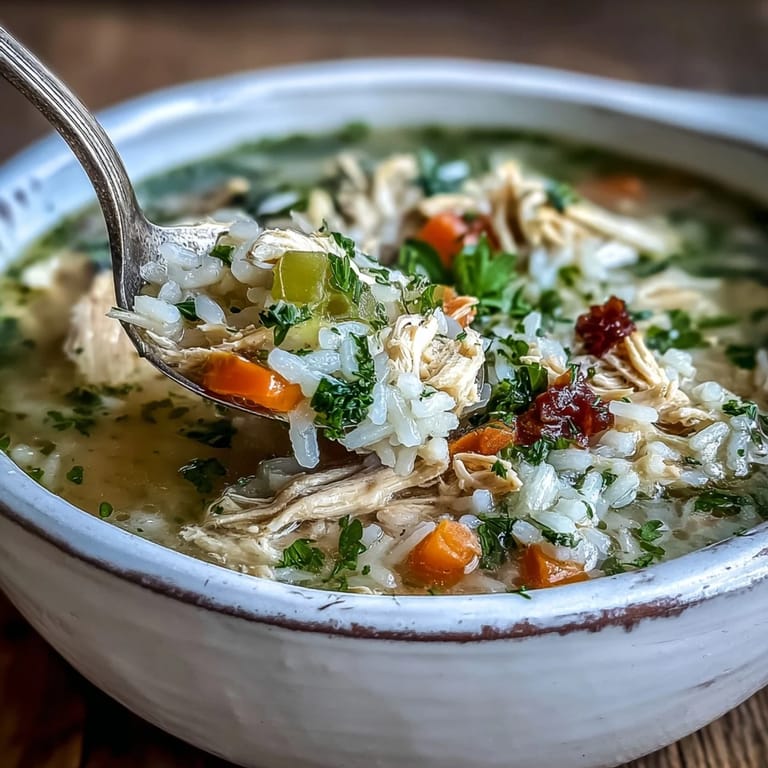
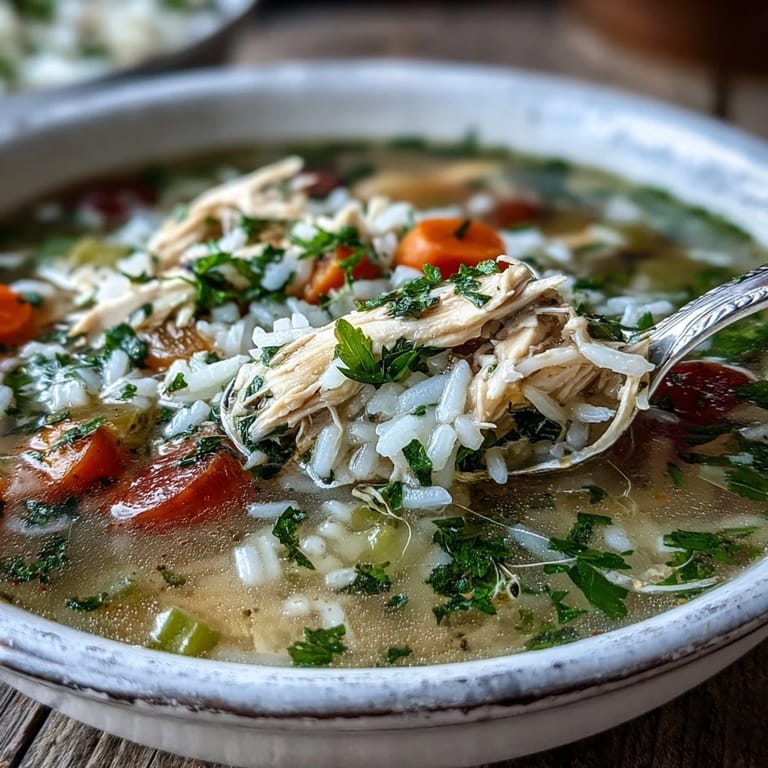
- Using two forks, shred the cooked chicken right into the pot, watching it pull apart effortlessly. Fish out the bay leaves, then stir in your fresh parsley and a squeeze of lemon juice if you're using it, tasting as you go to adjust the seasoning.
- Serve and savor:
- Ladle into deep bowls and serve while it's still steaming, letting it cool just enough that you won't burn your mouth in your eagerness to taste it.
 Save
Save My favorite moment happened on a Thursday night when my friend mentioned she hadn't been sleeping well, stressed about everything. I made this soup without telling her, and she showed up at my door looking exhausted and grateful. Halfway through her bowl, I watched her shoulders drop, saw her actually smile, and realized that some of the best meals aren't about impressing anyone—they're about quietly letting someone know they're cared for.
The Magic of One-Pot Cooking
There's something beautifully honest about a one-pot meal—everything happens in the same vessel, each ingredient building on the last, with no tricks or hidden techniques to master. You're not juggling multiple pans or stressing about timing because the rice cooks alongside the chicken in the same broth where the vegetables have already softened. This simplicity is exactly what makes this soup so reliable and why I return to it again and again, especially when life feels chaotic.
Why This Soup Feels Like a Hug
Winter soups have this quality where they're somehow both deeply nourishing and emotionally comforting at the same time. The warm broth wraps around you from the inside out, the tender chicken provides real substance, and those soft vegetables make you feel like you're eating something genuinely good for your body. It's the kind of meal that doesn't apologize for being simple, that celebrates what it is instead of pretending to be something fancier.
Variations and Personal Touches
Once you understand the basic structure of this soup, you'll realize how many directions you can take it based on what you have or what you're craving. I've made it with chicken thighs for a deeper, richer flavor, swapped the rice for farro when I wanted something heartier, and even added a splash of cream when I was feeling particularly indulgent. The recipe is flexible enough to welcome your instincts, which honestly is the best part about learning to cook a dish until it becomes truly yours.
- Try adding a handful of spinach or kale in the last few minutes for an extra boost of greens.
- A splash of dry white wine before adding the broth deepens the savory notes beautifully.
- Serving it with crusty bread means you can soak up every drop, so don't skip that part.
 Save
Save This soup has become my go-to comfort in any season, though it truly shines on the coldest nights when everything outside feels unwelcoming. There's genuine magic in a simple bowl that asks nothing of you except to sit, breathe, and let yourself be nourished.
Recipe FAQs
- → Can I use chicken thighs instead of breasts?
Yes, chicken thighs work wonderfully and provide a deeper, richer flavor. Use the same quantity and cooking time, as thighs remain tender and moist when simmered.
- → How do I store and reheat leftovers?
Store in an airtight container in the refrigerator for up to 4 days. Reheat gently on the stovetop over medium heat, adding a splash of broth if the rice has absorbed too much liquid.
- → Can I use brown rice instead of white rice?
Absolutely. Brown rice adds fiber and a nutty flavor, but requires 40-45 minutes of cooking time instead of 20-25 minutes. Adjust liquid if needed.
- → What can I substitute for fresh parsley?
Fresh dill, chives, or cilantro make excellent alternatives. You can also use 1 teaspoon of dried parsley, though fresh herbs provide brighter flavor.
- → How can I make this soup creamier?
Stir in 1/2 cup of heavy cream, half-and-half, or coconut cream during the final step. This adds richness and a velvety texture without overpowering the herbs and vegetables.
- → Can I freeze this soup?
Yes, this soup freezes well for up to 3 months. Cool completely before transferring to freezer-safe containers. Note that rice may soften slightly upon reheating.