 Save
Save My neighbor knocked on the door one evening holding a block of halloumi and asked if I knew what to do with it. I'd been craving something warming and creamy, so I pulled out a can of coconut milk and built this curry from whatever I had in the pantry. The halloumi turned golden and squeaky in the pan, soaking up the spiced tomato sauce like a sponge. We ended up eating straight from the skillet with torn naan, laughing at how something so simple tasted this good. That spontaneous dinner became a weekly ritual.
I made this for a friend who swore she didn't like curry, and she finished two bowls before admitting she was wrong. The coconut milk mellows the spices into something comforting rather than challenging, and the halloumi mimics paneer so well that even my Indian coworker was impressed. We sat on the porch with our bowls, squeezing lemon over the top and tearing off pieces of warm naan. She texted me the next morning asking for the recipe, and I knew it had passed the test. Now it's my go to when I want to win someone over.
Ingredients
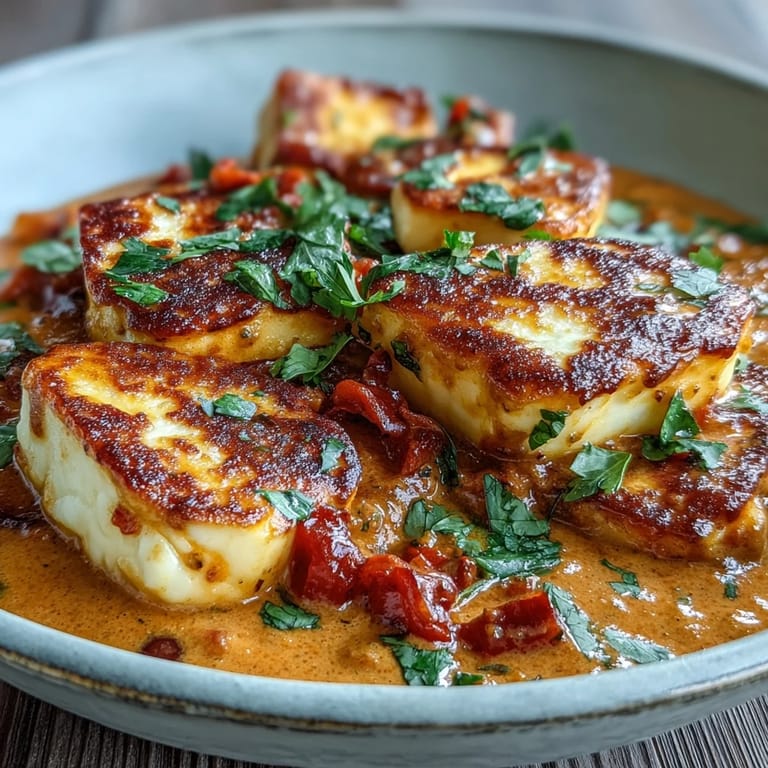
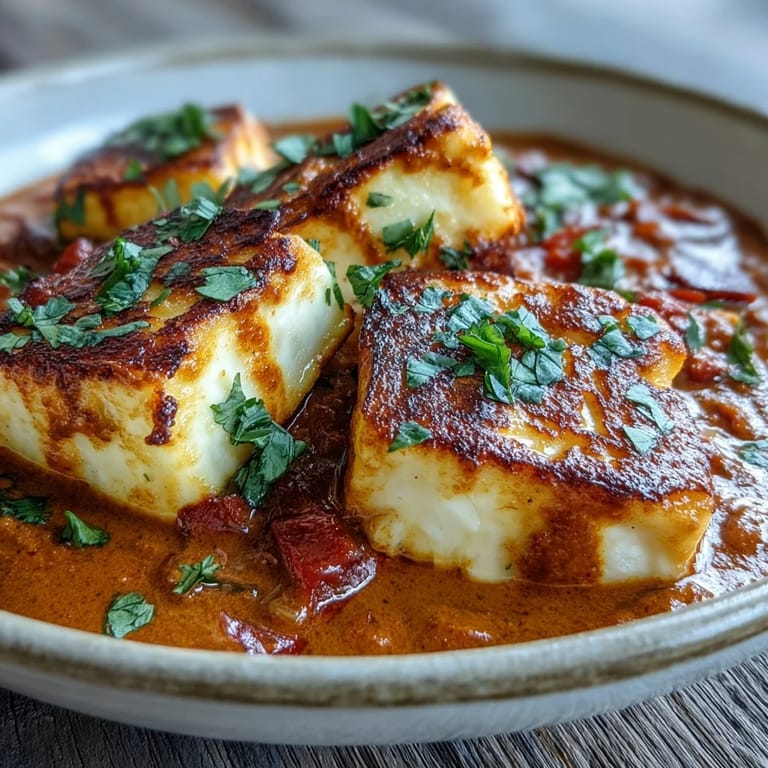
- Halloumi cheese: The star of the dish, it holds its shape when fried and develops a golden crust that contrasts beautifully with the creamy sauce.
- Onion, garlic, and ginger: This aromatic trio forms the flavor foundation, releasing a fragrance that fills the kitchen and signals something delicious is underway.
- Red bell pepper: Adds a touch of sweetness and color, balancing the earthy spices and giving the curry more body.
- Canned chopped tomatoes: They break down into a silky base, especially when simmered with the spices and coconut milk.
- Garam masala, cumin, coriander, turmeric, chili powder, and paprika: This spice blend creates warmth without overwhelming heat, building layers of flavor that deepen as the curry simmers.
- Coconut milk: Full fat works best here, lending a velvety richness that coats the halloumi and ties everything together.
- Tomato paste: A small amount intensifies the tomato flavor and helps thicken the sauce naturally.
- Vegetable oil: Used to fry the halloumi and sauté the aromatics, it keeps everything from sticking and helps bloom the spices.
- Fresh cilantro and lemon wedges: The brightness of cilantro and the acidity of lemon cut through the richness, making each bite feel balanced and fresh.
Tired of Takeout? 🥡
Get 10 meals you can make faster than delivery arrives. Seriously.
One email. No spam. Unsubscribe anytime.
Instructions
- Fry the halloumi:
- Heat the oil in a large nonstick skillet over medium high heat and add the halloumi cubes, frying them for 2 to 3 minutes per side until they turn golden and slightly crisp. Remove them and set aside on a plate so they stay warm and ready to soak up the sauce later.
- Sauté the aromatics:
- Lower the heat to medium and add the chopped onion to the same pan, stirring occasionally for 3 to 4 minutes until it softens and turns translucent. Stir in the garlic, ginger, and red bell pepper, cooking for another 2 to 3 minutes until the kitchen smells fragrant and inviting.
- Bloom the spices:
- Add the tomato paste along with the garam masala, cumin, coriander, turmeric, chili powder, and paprika, stirring constantly for about 1 minute. This step releases the essential oils in the spices and builds a deep, aromatic base for the curry.
- Build the sauce:
- Pour in the canned tomatoes and coconut milk, stirring everything together until well combined, then season with salt and black pepper. Let the mixture simmer for 8 to 10 minutes, stirring occasionally, until it thickens and the flavors meld into a cohesive, creamy sauce.
- Add the halloumi back:
- Return the fried halloumi to the pan and let it gently simmer in the sauce for 5 minutes, allowing the cheese to absorb the curry flavors without losing its texture. Taste and adjust the seasoning if needed, adding more salt, pepper, or a pinch of chili powder.
- Garnish and serve:
- Finish with a generous handful of chopped fresh cilantro and serve with lemon wedges on the side for squeezing. The citrus lifts the richness and makes every bite feel complete.
 Save
Save One rainy Sunday, I doubled the recipe and invited a few friends over without much planning. We sat around the table with big bowls of rice, passing the skillet and tearing off chunks of naan, and someone said it felt like being at a family dinner in a place none of us had ever been. The curry became the centerpiece without trying, warm and forgiving and easy to share. That afternoon reminded me that the best meals are the ones that bring people together without fuss.
Serving Suggestions
This curry shines alongside steamed basmati rice, which soaks up the creamy sauce and balances the richness of the halloumi. Warm naan or roti works just as well, especially for scooping up every last bit from the bowl. I have also served it with roasted cauliflower or a simple cucumber raita to add freshness and contrast. A cold beer or a glass of lassi on the side makes the meal feel complete, especially on a warm evening when you want something satisfying but not too heavy.
Variations and Substitutions
If you cannot find halloumi or want a more traditional flavor, paneer works beautifully and absorbs the sauce in a slightly different way. For a vegan version, swap the cheese for firm tofu or chickpeas and use a plant based yogurt swirl at the end. You can add more vegetables like spinach, peas, or diced zucchini during the simmering stage to bulk it up. I have also used a mix of garam masala and curry powder when I ran out of individual spices, and it still turned out delicious. The recipe is forgiving, so feel free to adjust based on what you have or what your family enjoys.
Storage and Reheating
Store leftovers in an airtight container in the fridge for up to three days, and the flavors will deepen as they sit. Reheat gently on the stovetop over low heat, adding a splash of water or coconut milk if the sauce has thickened too much. The halloumi holds its texture surprisingly well, though it may soften slightly after a day or two. I do not recommend freezing this curry because the cheese can become rubbery, but the sauce on its own freezes beautifully if you want to prep ahead and add fresh halloumi later.
- Let the curry cool completely before transferring to storage containers to avoid condensation.
- Reheat only the portion you plan to eat to keep the rest fresh longer.
- Garnish with fresh cilantro and a squeeze of lemon just before serving to bring back the brightness.
 Save
Save This curry has become my answer to weeknight chaos and lazy weekend cravings alike, always delivering comfort without demanding too much effort. I hope it finds a place in your kitchen the way it has in mine, filling your home with warmth and your table with happy faces.
Recipe FAQs
- → Can I substitute halloumi with another cheese?
Yes, paneer is the best substitute as it has a similar firm texture and mild flavor. Tofu can also work for a dairy-free version, though it won't have the same salty richness.
- → How can I make this curry spicier?
Add a chopped green chili with the aromatics, increase the chili powder to 1 teaspoon, or add a pinch of cayenne pepper. You can also serve with hot sauce on the side.
- → Can I prepare this curry in advance?
Yes, you can make the sauce ahead and refrigerate for up to 3 days. Fry the halloumi fresh before serving and reheat the sauce gently, then combine and simmer together.
- → What can I serve alongside this curry?
Steamed basmati rice, warm naan bread, or roti are traditional choices. You can also serve with quinoa, cauliflower rice, or a simple cucumber raita for balance.
- → Why is my halloumi rubbery after cooking?
Overcooking can make halloumi tough. Fry only until golden (2-3 minutes per side), and add it back to the sauce for just 5 minutes at the end to warm through without becoming rubbery.
- → Can I use light coconut milk instead of full-fat?
Yes, though the sauce will be less creamy and rich. For best results, use full-fat coconut milk which creates the signature silky texture and balances the spices perfectly.