 Save
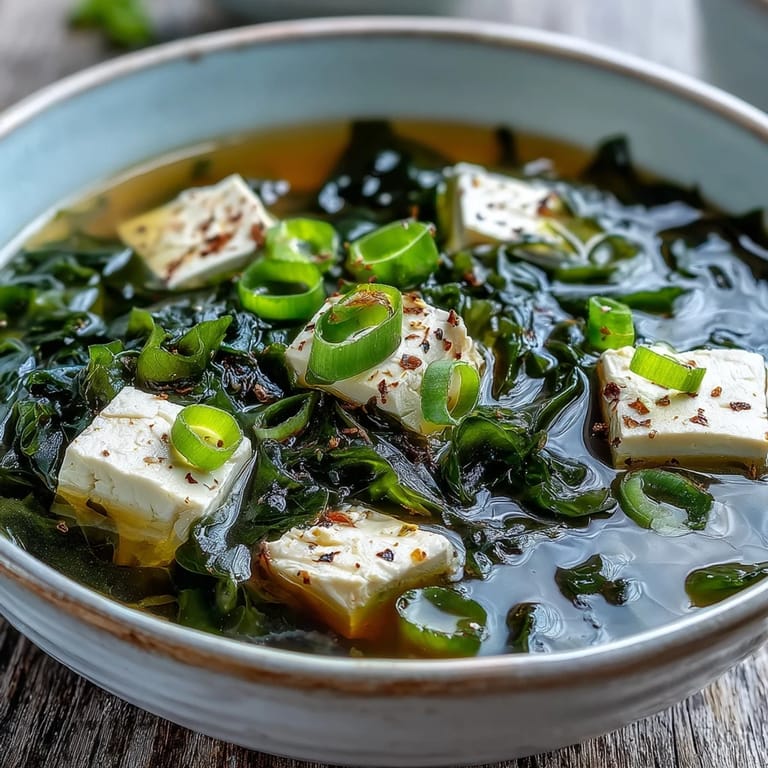
Save My grandmother kept a small jar of wakame on her kitchen shelf, and whenever I'd visit, she'd quietly prepare this soup without fanfare—just a few ingredients and ten minutes of gentle simmering. There was something almost meditative about watching the dark seaweed unfurl in the hot broth, like it was waking up after a long sleep. She never called it fancy or special; it was simply what you made when you wanted to feel nourished, when the body needed something honest and clean-tasting. That quiet ritual stuck with me more than any elaborate recipe ever could.
I made this for a friend who was recovering from being under the weather, and watching her take that first spoonful—how her shoulders seemed to relax—I understood why my grandmother reached for this soup instinctively. There's something about the simplicity that lets your body absorb exactly what it needs without any noise or pretense.
Ingredients
- Dried wakame seaweed: Don't skip the soaking step—those five minutes transform brittle threads into tender ribbons that melt against your tongue with a subtle ocean minerality.
- Dashi stock: This is your foundation; good dashi makes the entire soup sing, so invest in quality kombu or use vegetarian dashi made from shiitake and konbu if you prefer.
- Silken or firm tofu: Silken tofu creates a silkier mouthfeel, while firm holds its shape better; choose based on whether you want delicate or more substantial bites.
- Scallions: These add a bright, grassy note at the very end; slice them just before serving so they stay fresh and crisp.
- White miso paste: The gentle, slightly sweet notes work beautifully here—never boil it, as heat destroys its living cultures and nuanced flavor.
- Soy sauce: A small amount goes far; taste as you go and adjust to your preference for saltiness.
- Sesame oil: Just a touch at the end adds a whisper of warmth and richness that makes people wonder what your secret is.
Tired of Takeout? 🥡
Get 10 meals you can make faster than delivery arrives. Seriously.
One email. No spam. Unsubscribe anytime.
Instructions
- Awaken the seaweed:
- Scatter your dried wakame into a small bowl of cold water and let it sit for five minutes—you'll see it gradually plump up and soften, releasing its oceanic aroma into the air.
- Warm your broth:
- Pour your dashi into a medium saucepan and bring it to a gentle simmer over medium heat; you want it steaming softly, not aggressively boiling, so the delicate flavors stay intact.
- Introduce the star ingredients:
- Add your drained wakame and cubed tofu to the simmering broth, then let them warm through together for two to three minutes—this is enough time for them to become friends in the pot.
- Dissolve the miso:
- Scoop a ladle of hot broth into a separate small bowl, then whisk your miso paste into it until smooth and creamy—this prevents lumps and ensures even flavor throughout. Gently stir this mixture back into the soup.
- Season to balance:
- Add your soy sauce and sesame oil if using, then give everything a gentle stir and let it warm for one more minute without boiling—you're coaxing the flavors together, not rushing them.
- Serve with intention:
- Pour the soup into bowls and top each one with a handful of sliced scallions, letting their brightness contrast against the dark broth.
 Save
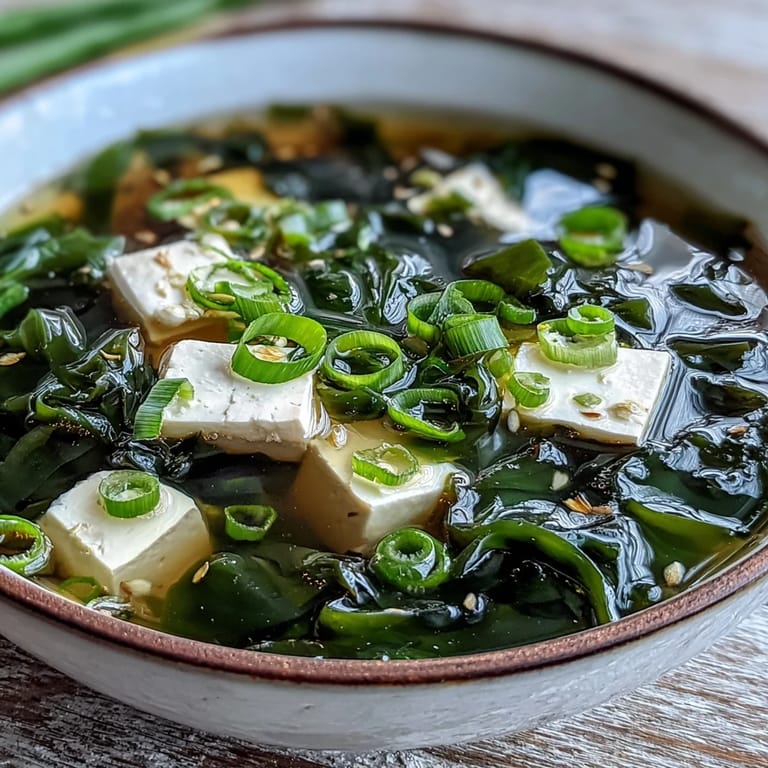
Save There was an afternoon when my partner came home exhausted from work, and I had this soup ready without them asking for anything. They sat at the kitchen counter, the steam rising toward their face, and I watched the tension in their neck gradually soften. Food became medicine in that moment, not through any fancy ingredients but through simple attention and timing.
The Art of Dashi
Dashi is the soul of this soup, and while you can buy it pre-made in pouches or liquid concentrate, understanding how it works deepens your appreciation for why this recipe feels so complete. Traditional dashi comes from simmering kombu seaweed and bonito flakes, but for a vegetarian version, shiitake mushrooms and kombu alone create an equally profound umami base. The broth should taste clean and subtly sweet, never fishy or overwhelming—that clarity is what makes this soup feel light despite being nourishing.
Playing with Variations
Once you've made this basic version a few times, you'll start noticing what your body and kitchen want added. A handful of fresh spinach wilts in beautifully, thin carrot ribbons add sweetness and color, or a few sliced shiitake mushrooms create earthiness and texture. I've even added a soft-poached egg for a richer version, though my grandmother would have raised an eyebrow at such embellishment. The recipe is sturdy enough to welcome changes while remaining true to itself.
Pairing and Serving
This soup shines as a quiet opener to a larger Japanese meal, settling the stomach gently before rice and grilled items arrive. It also stands alone as lunch or a light dinner, especially on evenings when you need something that feels both substantial and undemanding. Consider serving it alongside a small dish of pickled vegetables, steamed rice, or even fresh fruit to round out the experience.
- Serve in warmed bowls to keep the soup at the perfect temperature longer and make the whole experience feel intentional.
- Have extra scallions and a small drizzle bottle of sesame oil on the table so people can adjust their own bowls to taste.
- Make the dashi ahead of time—it keeps for several days and turns weeknight cooking into something wonderfully simple.
 Save
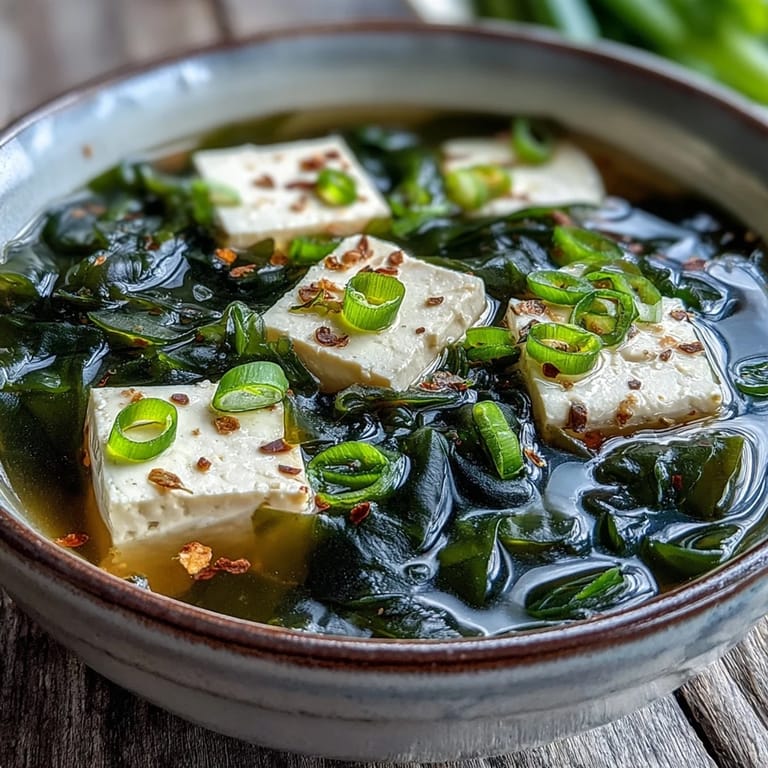
Save This soup asks very little of you yet gives back comfort and nourishment in equal measure. Make it when you need grounding, when someone you love needs caring for, or simply because ten minutes is all you have and your body deserves something real.
Recipe FAQs
- → What does wakame taste like?
Wakame has a mild, slightly sweet flavor with subtle ocean notes. When rehydrated, it becomes tender and silky, absorbing the flavors of the broth while maintaining a pleasant chewy texture.
- → Can I make this vegan?
Absolutely. Simply use a vegetarian dashi made from kombu (kelp) and dried shiitake mushrooms instead of traditional fish-based dashi stock. The miso paste should also be checked for bonito flakes.
- → Why shouldn't the soup boil after adding miso?
Boiling miso paste can kill the beneficial probiotics and alter its delicate flavor. Always dissolve miso in a small amount of hot broth first, then stir it into the soup at the end, heating gently without reaching a boil.
- → How do I store leftovers?
Store cooled soup in an airtight container in the refrigerator for up to 2 days. Reheat gently over low heat, avoiding a boil to preserve the miso's beneficial properties and prevent the tofu from becoming too firm.
- → Can I add other vegetables?
Certainly. Sliced mushrooms, diced carrots, baby spinach, or thinly sliced daikon radish make excellent additions. Add heartier vegetables like carrots earlier in the cooking process, while delicate greens like spinach should be added in the final minute.
- → Is wakame nutritious?
Yes, wakame is exceptionally rich in iodine, calcium, magnesium, and vitamins A, C, E, and K. It's also a good source of omega-3 fatty acids and provides beneficial fiber, making this soup both delicious and nourishing.