 Save
Save There's something about the smell of soffritto hitting hot oil that makes me forget about whatever stressed me out that day. Years ago, my neighbor Maria taught me that minestrone isn't one rigid thing—it's a conversation between you and whatever vegetables are sitting in your fridge, seasoned with whatever your mood demands. That lesson stuck with me, and now every time I make it, I'm reminded that the best soups are the ones you bend to fit the moment.
I made this for my partner on the first cold day of fall, right when we were both tired of salads and ready for something that steamed up the kitchen windows. We sat at the counter for longer than it took to eat the soup, just talking and letting the warmth remind us why we liked being home together. That's when I understood that minestrone is less about following instructions and more about creating an excuse to slow down.
Ingredients
- Olive oil: Use the good stuff you actually like the taste of, because it's going to flavor the whole pot and there's nowhere for mediocre oil to hide.
- Onion, carrots, and celery: This is your foundation—don't rush the softening of these three, because they build the flavor that holds everything together.
- Garlic: Add it after the soffritto so it doesn't burn and turn bitter; minced means it disappears into the soup and flavors every spoonful.
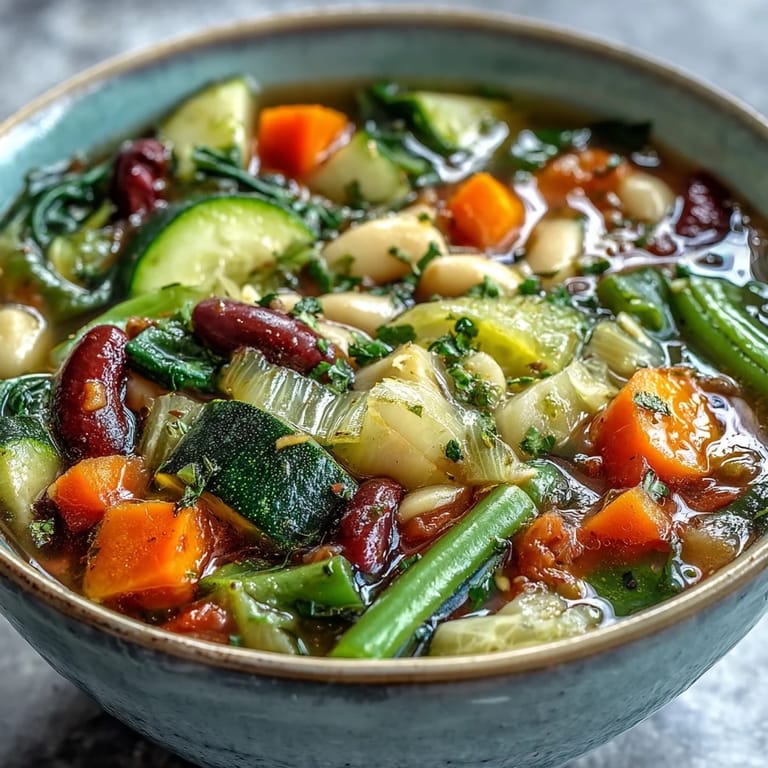
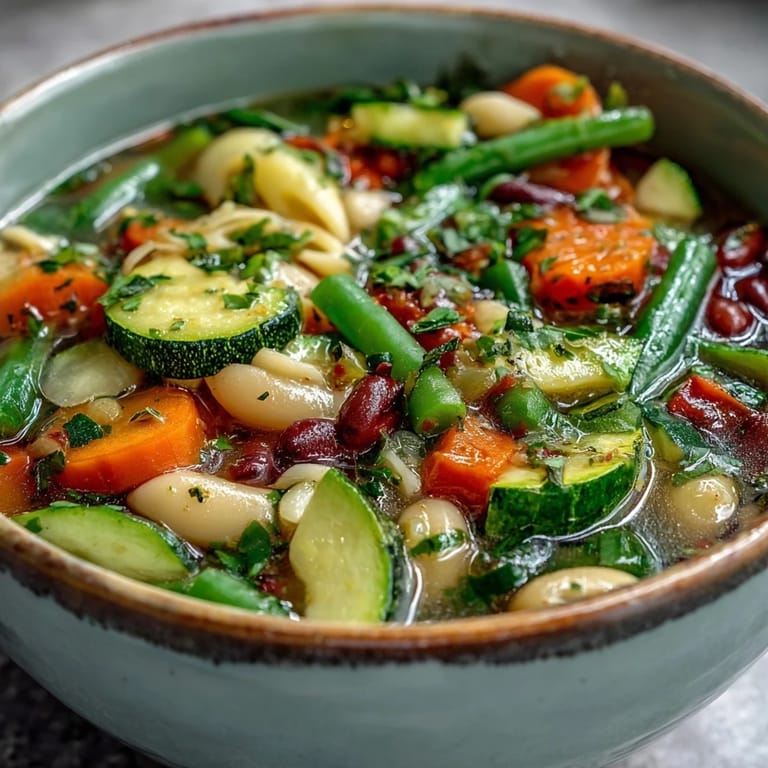
- Zucchini or butternut squash: Summer or winter, this vegetable adapts with you; zucchini collapses into soft sweetness in warm months, squash brings earthiness when it's cold.
- Green beans, kale, or spinach: Whatever green you choose, it'll wilt down and add color and a bit of texture that keeps the soup from feeling like just broth.
- Diced tomatoes: Canned is fine—actually, canned might be better because it's consistent and you can rely on it even when fresh tomatoes disappoint you.
- Potato: Optional, but it thickens the broth slightly and makes the soup feel more substantial without any pretense.
- Vegetable broth: Taste it first; if it's good, it matters, and if it's bland, a little extra salt or a bay leaf will help.
- Beans: Cannellini or borlotti both work, but drain and rinse them so they don't make your broth cloudy and starchy.
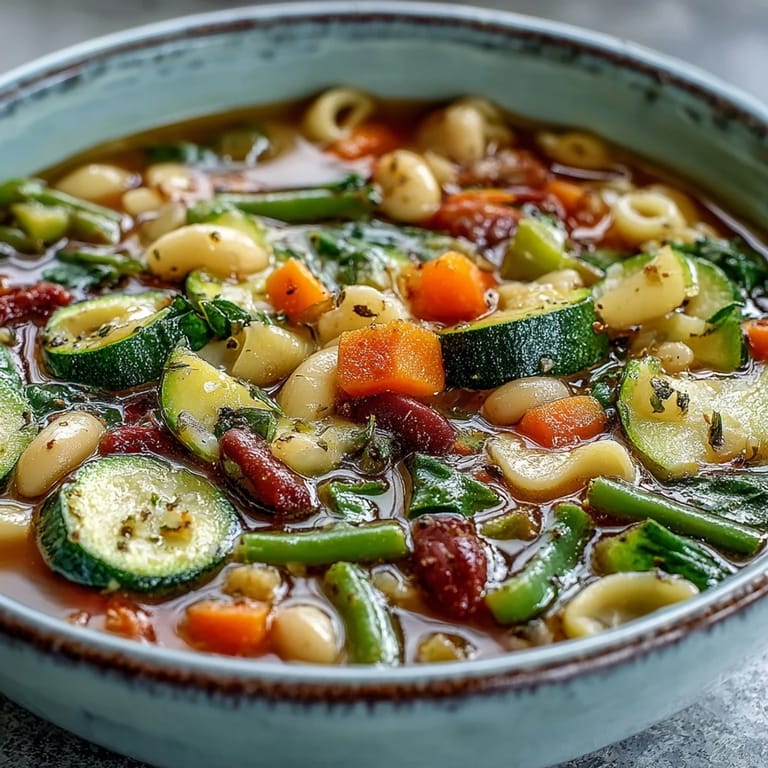
- Small pasta: Ditalini, elbow, or shells—nothing long because long pasta gets tangled and harder to eat from a spoon, and minestrone should be easy and forgiving.
- Bay leaf, oregano, and basil: Dried herbs work perfectly here because they have time to wake up and infuse the broth; fresh herbs go in at the end so they don't lose their brightness.
- Parmesan: Optional, but a good Parm rind simmered in the pot adds a depth that makes you wonder why you ever skip this step.
Tired of Takeout? 🥡
Get 10 meals you can make faster than delivery arrives. Seriously.
One email. No spam. Unsubscribe anytime.
Instructions
- Heat your oil and build your base:
- Pour olive oil into a large pot and let it heat until it shimmers slightly. Add your diced onion, carrots, and celery all at once, then listen for the gentle sizzle that means they're making contact with the heat. Stir occasionally and watch as they soften and become translucent, about five minutes—this is not a step to rush because this is where your soup's flavor is born.
- Add the garlic and second vegetables:
- Once the base vegetables are soft, stir in your minced garlic and let it perfume the oil for about thirty seconds before adding zucchini or squash and your green vegetable of choice. Cook for three minutes more, just until everything becomes friendly and the raw edges start to soften—your kitchen should smell incredible right now.
- Introduce the tomatoes and potato:
- Add your canned tomatoes, the potato if you're using one, and your bay leaf. Let these sit in the hot vegetables for a minute or two so flavors start meeting, then pour in your broth slowly—watching it combine with everything is half the pleasure.
- Bring to a simmer and be patient:
- Turn the heat up until you see a gentle boil beginning, then lower it so the soup simmers rather than aggressively bubbles. This fifteen-minute simmer is when the vegetables actually finish cooking and start to think about melding together, when flavors deepen instead of remaining separate.
- Add the beans and pasta:
- After fifteen minutes, stir in your drained beans and pasta together. The pasta will soften over the next ten to twelve minutes, and you'll watch the broth turn slightly cloudy and beautiful as the pasta releases its starch. This is when you know you're close.
- Season with intention:
- Taste the broth now, then add your oregano and basil, salt and pepper to taste, and remove the bay leaf. The herbs will wake up in the heat, and you'll taste them almost immediately—this is not the time to be shy with seasoning because a good soup says what it means.
- Finish and serve:
- Stir in your fresh parsley right at the end, ladle the soup into bowls, and if you want, grate Parmesan over the top or drizzle a small amount of really good olive oil across the surface. Serve immediately with bread while everything is still hot and the steam is still rising.
 Save
Save My mom showed up at my door one winter evening when I was making this, took one look at what I was doing, and nodded in a way that meant she was proud but wouldn't say it. We made the soup together without talking much, and somewhere between the simmering and the serving, she told me that her mother made something similar, and that her mother's mother probably did too. It occurred to me that minestrone isn't just food—it's a small way of saying I'm here, and you matter enough that I'm feeding you something made with my own hands.
Seasonal Swaps That Actually Make Sense
Spring begs for peas, tender leeks, and fresh greens that barely need cooking. Summer demands zucchini and green beans, things that taste like the season itself. Fall brings butternut squash and kale, vegetables with substance that don't fall apart in the pot. Winter is for hardy cabbage, root vegetables, and anything sturdy enough to withstand a long simmer. The beauty of minestrone is that it doesn't care which vegetables you choose—it just wants you to choose something that tastes good right now, in this moment.
The Parmesan Rind Secret
If you cook regularly and have Parmesan in your fridge, save those rinds instead of throwing them away. Drop one into your minestrone as it simmers and you'll taste the difference—it's not subtle, it's actually transformative in the best way. The rind softens slightly and releases this deep, almost sweet umami into the broth that makes people ask what your secret ingredient is. Fish it out before serving, or just warn people that it's there and let them decide if they want to negotiate with it.
Making It Vegan and Other Adaptations
Leaving off the Parmesan makes this soup completely vegan, and honestly, the soup doesn't suffer—it's already delicious without it. Some people swear by a drizzle of truffle oil or a really good finishing oil if they're skipping cheese. Use vegetable broth instead of any animal-based broth, and the soup remains exactly what it's supposed to be. Gluten-free pasta works perfectly if you need to avoid wheat, and the soup doesn't care about the substitution at all.
- A Parmesan rind simmered in the pot adds depth that feels luxurious without any extra effort on your part.
- Toast some bread under the broiler and rub it with garlic, then serve it on the side for dunking and texture.
- Make extra and freeze it without the pasta cooked in, then add fresh pasta when you reheat so nothing gets mushy.
 Save
Save Make this soup when you need something real, something that tastes like it was made with care and not shortcuts. Serve it to people you want to know better, because somehow soup makes conversations easier and everything tastes better when it's hot and shared.
Recipe FAQs
- → Can I use different vegetables in this minestrone?
Absolutely! This soup is highly adaptable. In summer, use zucchini, green beans, and fresh tomatoes. In winter, opt for butternut squash, kale, cabbage, or leeks. Spring variations can include peas and asparagus. The key is maintaining a balance of textures and flavors.
- → What type of pasta works best?
Small pasta shapes like ditalini, elbow macaroni, or small shells work perfectly. They cook evenly and are easy to eat with a spoon. For a gluten-free version, use gluten-free pasta and add it during the last 10-12 minutes of cooking.
- → How can I make this soup more flavorful?
Add a Parmesan rind while the soup simmers for depth of flavor. Use high-quality olive oil for drizzling. Fresh herbs like basil or parsley at the end brighten the taste. You can also sauté a bit of tomato paste with the garlic for richer tomato flavor.
- → Can I make this soup ahead of time?
Yes! Minestrone actually tastes better the next day as flavors meld. Store it in the refrigerator for up to 4 days. Note that pasta will absorb liquid over time, so you may need to add extra broth when reheating. For best results, consider cooking pasta separately and adding it when serving.
- → How do I make this vegan?
Simply omit the Parmesan cheese or use a dairy-free alternative. The soup is already vegetable-based with vegetable broth and beans providing protein. Ensure your pasta is egg-free, and finish with nutritional yeast for a cheesy flavor if desired.
- → What should I serve with minestrone?
Crusty Italian bread or focaccia is traditional. A simple green salad with balsamic vinaigrette complements the hearty soup nicely. Drizzle high-quality extra virgin olive oil over each bowl before serving for authentic Italian flavor.