 Save
Save I discovered seaweed salad on a humid summer afternoon at a tiny Japanese restaurant tucked between a bookstore and a flower shop. The owner, who barely spoke English, placed it in front of me without explanation—just a knowing smile. One bite and I was hooked: that perfect snap of rehydrated wakame, the way sesame oil and ginger sang together, the kind of simplicity that makes you realize you've been overthinking food your whole life.
My partner came home one evening completely exhausted from back-to-back meetings, and I had exactly nothing thawed and nothing planned. I remembered that bag of dried seaweed sitting in the pantry from a farmers market impulse buy months before. Twenty minutes later, we were eating in comfortable silence, and they actually said, 'This is better than going out.' That's when I knew this recipe had staying power.
Ingredients
- Dried wakame seaweed: This is the star—30 grams might look tiny, but it expands dramatically when soaked, giving you that tender-chewy texture that makes the whole salad work.
- Cucumber: Slice it thin and let it sit on paper towels for a minute to release excess water, or your salad will get watery as it sits.
- Carrot: A mandoline makes julienning effortless and consistent, but a sharp knife and a steady hand work just fine too.
- Scallions: Use the white and light green parts mostly; save the dark greens for garnish if you want a professional touch.
- Toasted sesame oil: Buy the good stuff—the difference between regular and genuinely toasted is everything here, and it costs maybe a dollar more.
- Rice vinegar: This is milder than other vinegars, which keeps the dressing balanced instead of punchy.
- Soy sauce or tamari: Low-sodium versions let the other flavors shine instead of being overpowered by salt.
- Fresh ginger: Grating it directly over the dressing (as opposed to mincing) gives you those little bursts of warmth and texture.
- Maple syrup or honey: Just a touch rounds out the dressing so it's not purely savory—trust this even if you usually skip sweetener in salads.
- Sesame seeds: Toast them yourself in a dry pan for about two minutes if you have time; the difference is noticeable and worth it.
Tired of Takeout? 🥡
Get 10 meals you can make faster than delivery arrives. Seriously.
One email. No spam. Unsubscribe anytime.
Instructions
- Wake up the seaweed:
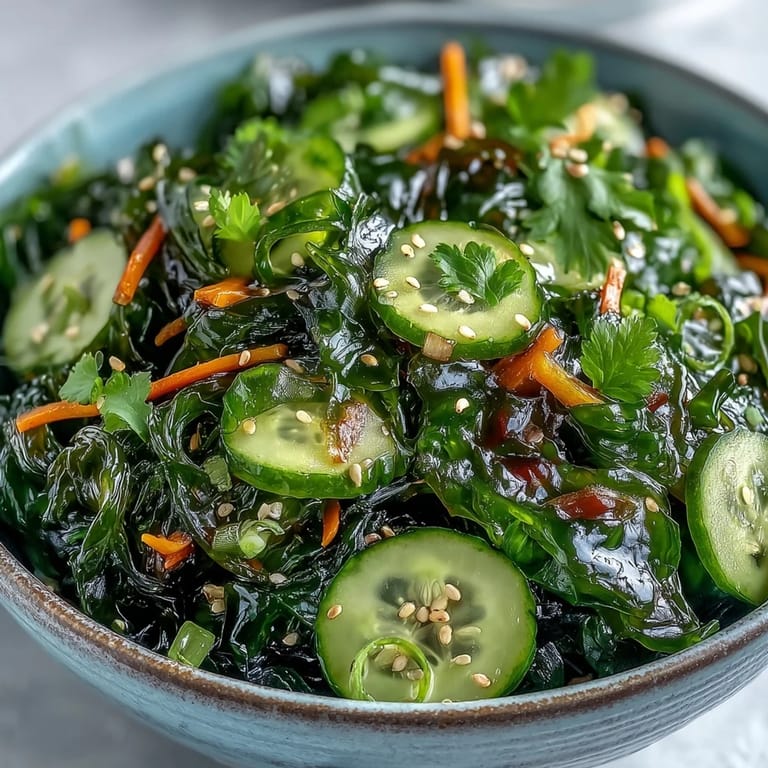
- Place your dried wakame in a bowl and cover it generously with cold water. You'll watch it go from brittle little flakes to silky ribbons in about 8 minutes—it's almost meditative. Drain it thoroughly and give it a gentle squeeze to remove excess water, but don't wring it like you're angry at it.
- Build your salad base:
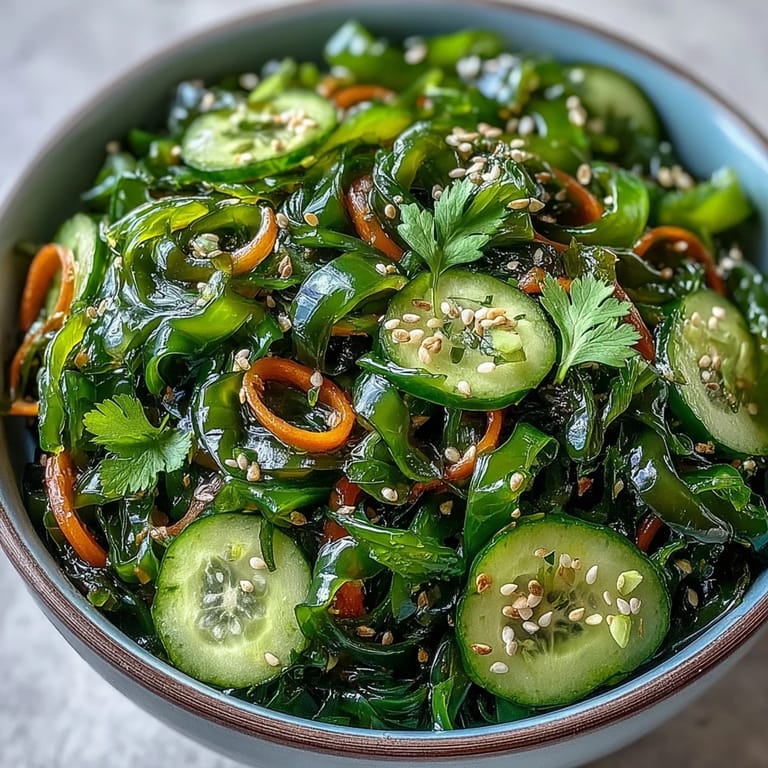
- In a large bowl, toss together the rehydrated seaweed, cucumber, carrot, and scallions. The vegetables add color and crunch, but the seaweed is what makes this memorable.
- Create the dressing:
- In a small bowl, whisk together sesame oil, rice vinegar, soy sauce, fresh ginger, maple syrup, sesame seeds, and chili flakes if using. The whisking brings everything into harmony—you'll smell it when it's ready, actually.
- Bring it together:
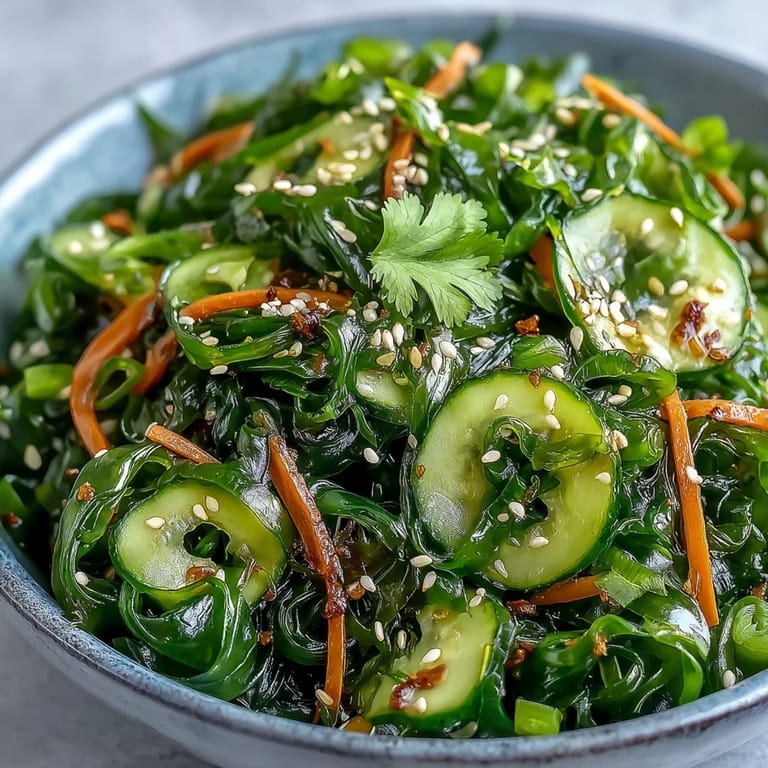
- Pour the dressing over the salad and toss gently with your hands or two spoons. Gentle is the word here; you're not trying to bruise the seaweed or break down the vegetables.
- Finish and serve:
- Transfer to a serving bowl and scatter the additional sesame seeds and fresh herbs across the top. You can serve it right away, but if you have 15 minutes to let it sit in the fridge, the flavors deepen in the most satisfying way.
 Save
Save I brought this to a potluck once, and it was gone in minutes while the elaborate casseroles sat untouched. Someone asked for the recipe, and I realized that's when you know you've made something real—not Instagram-worthy, just genuinely delicious and satisfying enough that people actually want to remember it.
Why This Salad Feels Special
There's something about the combination of seaweed and sesame that feels like a secret—like you've tapped into something people eat in Japan every day but American home cooks somehow miss. It's not complicated or precious, but it makes you feel like you're doing something intentional instead of just throwing iceberg lettuce and ranch dressing into a bowl. The nutritional density is a bonus too; you're not just eating something green, you're eating something genuinely good for you.
The Art of the Proper Soak
The wakame will look impossibly small when dry, but don't panic. Cold water is important here because it rehydrates the seaweed without cooking it, keeping that tender texture. If you've ever used hot water, you probably ended up with something mushy—I learned that the hard way. The 7 to 10 minute window matters; too short and it's still tough, too long and it starts to lose its structure.
Flavor Layering and Adjustments
This dressing works because nothing dominates—instead, everything supports everything else. The sesame oil provides richness, the ginger brings heat and brightness, the maple syrup adds just enough sweetness to make the soy sauce feel less salty. If your dressing tastes too acidic, add a pinch more sweetener; if it feels flat, a small squeeze of fresh lemon or lime can wake it up. Taste as you go, and don't feel locked into the exact amounts because your palate knows what you like better than any recipe does.
- Keep chili flakes on the side and let people add their own heat at the table—not everyone wants spice, and respecting that makes people happier.
- If you're making this ahead, store the dressing separately and dress the salad just before serving so the vegetables stay crisp.
- Leftovers taste great for up to two days if you keep them in an airtight container, making this perfect for meal prep or bringing to work.
 Save
Save This salad has become my answer to 'What do I make when I want something that tastes intentional but doesn't require hours in the kitchen.' It's the kind of dish that reminds you why simple food, made with real ingredients and a bit of attention, never goes out of style.
Recipe FAQs
- → What type of seaweed works best?
Dried wakame seaweed is ideal for this dish. It rehydrates quickly, becomes tender, and absorbs the sesame-ginger dressing beautifully. Look for it in Asian markets or the international aisle of well-stocked grocery stores.
- → Can I make this ahead of time?
Yes, this salad actually improves after chilling for 15-30 minutes. The flavors meld together and the seaweed absorbs more of the dressing. Store in an airtight container in the refrigerator for up to 2 days.
- → Is this dish gluten-free?
It can be gluten-free when you use tamari instead of regular soy sauce. All other ingredients are naturally gluten-free, making it an excellent option for those with gluten sensitivities.
- → What can I add for extra texture?
Thinly sliced radish, shredded red cabbage, or edamame beans add wonderful crunch. Some people enjoy adding thin ribbons of nori or a sprinkle of crushed peanuts for additional texture variation.
- → How do I prevent the seaweed from being too salty?
Rinse the rehydrated seaweed thoroughly after soaking and squeeze out excess water. Taste the dressing before adding it—you can always reduce the soy sauce or add a bit more maple syrup to balance the flavors.
- → Can I use a different sweetener?
Absolutely. Maple syrup, honey, agave nectar, or even a small amount of sugar all work well in the dressing. Choose based on your dietary preferences and what you have available.