 Save
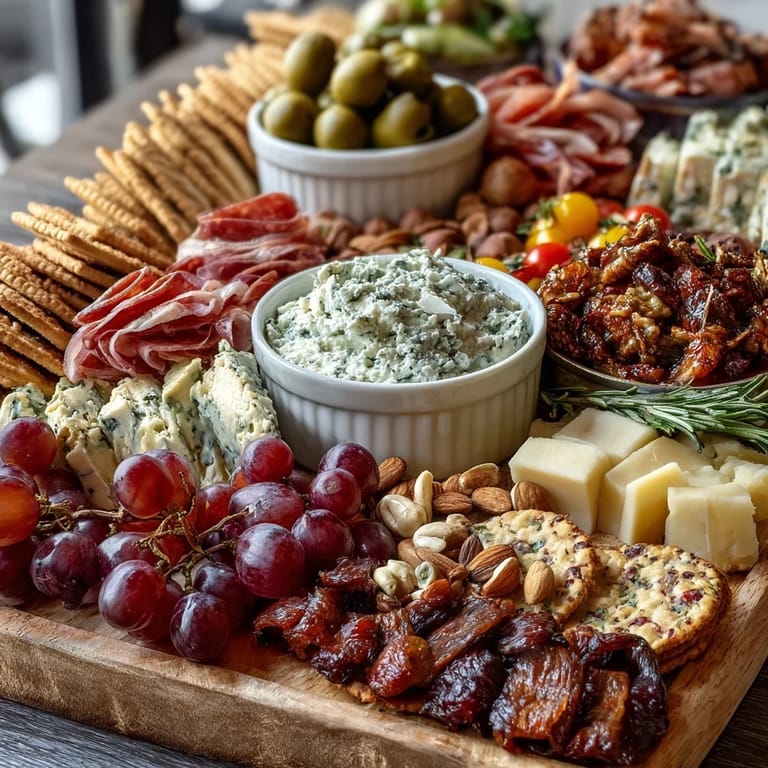
Save My neighbor texted me three days before moving in: "We're doing a casual housewarming—just bring something." I stood in my kitchen wondering what travels well, impresses without effort, and somehow says both "I'm excited for you" and "let's be friends." A charcuterie board hit all those marks. What started as a practical solution turned into the most talked-about thing that evening, watched as guests circled back repeatedly, discovering new flavor combinations.
Watching my friend's eyes light up as she surveyed that board—the colors, the textures, the little discoveries—reminded me that entertaining doesn't require complicated recipes. Sometimes the best moments happen when you just arrange beautiful things thoughtfully and step back. She told me later that board was what made the space feel like a home worth celebrating.
Ingredients
- Prosciutto (120 g): Buy it sliced at the counter, not pre-packaged—the texture and flavor are noticeably better, and it drapes more elegantly on the board.
- Salami (120 g): Choose a quality variety like soppressata or Italian salami; the difference matters when this is the star, not a supporting player.
- Smoked ham (120 g): This adds meatiness and visual variety without overwhelming the board with too much richness.
- Chorizo slices (100 g): The color and spice bring personality; slice it yourself from a whole piece for fresher taste.
- Brie (150 g): Buy a wedge and slice it just before serving so the interior stays creamy—pre-sliced goes dry quickly.
- Aged cheddar (150 g): The sharpness cuts through rich meats and creates cravings for another combination.
- Gouda (120 g): Its subtle sweetness bridges the gap between savory and the fruit on the board.
- Blue cheese (100 g): Crumble it fresh; this is where bold eaters go first, and you want it tasting bright and alive.
- Hummus (100 g): Make it or buy quality—this dip is the gateway for guests avoiding meat.
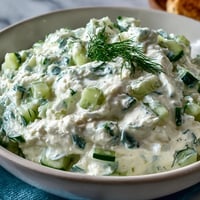
- Tzatziki (100 g): The cool, herby freshness prevents dip fatigue; it's your palate cleanser.
- Roasted red pepper dip (100 g): Adds sweetness and color; store-bought works fine here.
- Assorted crackers (150 g): Mix textures—crispy water crackers, seeded multigrain, thin and thick—so every cheese finds its match.
- Baguette, sliced (100 g): Toast it lightly if serving more than an hour after prep; it stays crisp and bread flavor develops.
- Breadsticks (100 g): These solve the problem of dipping when crackers aren't ideal.
- Red and green grapes (2 cups total): Chill them beforehand—the coolness and burst of juice refresh the palate.
- Cherry tomatoes (1 cup): Buy the sweetest you can find; they should taste like candy, not grocery store plastic.
- Cucumber slices (1 cup): Cut them just before serving and pat dry so they don't make everything wet.
- Red bell pepper, sliced (1): The sweetness and color are essential; cut into strips so guests can dip them easily.
- Baby carrots (1 cup): Leave them whole or halved—they're hearty enough to scoop dip without breaking.
- Mixed nuts (½ cup): Choose unsalted or lightly salted; they should complement, not compete with the board.
- Olives, pitted (½ cup): Mix green and black for visual interest and different brine flavors.
- Dried apricots (¼ cup): Their natural sweetness and chewiness create unexpected pleasant surprises among savory items.
- Dried figs (¼ cup): Dice them slightly or leave whole; they're luxurious without being heavy.
- Fresh herbs for garnish: Rosemary sprigs and thyme branches add aroma and final polish—use them, don't skip this step.
Tired of Takeout? 🥡
Get 10 meals you can make faster than delivery arrives. Seriously.
One email. No spam. Unsubscribe anytime.
Instructions
- Start with your foundation:
- Lay out your board or platter on a clean surface and step back—you're about to choreograph something beautiful. Think of this like painting: you need a sense of the whole space before placing individual elements.
- Create meat arrangements:
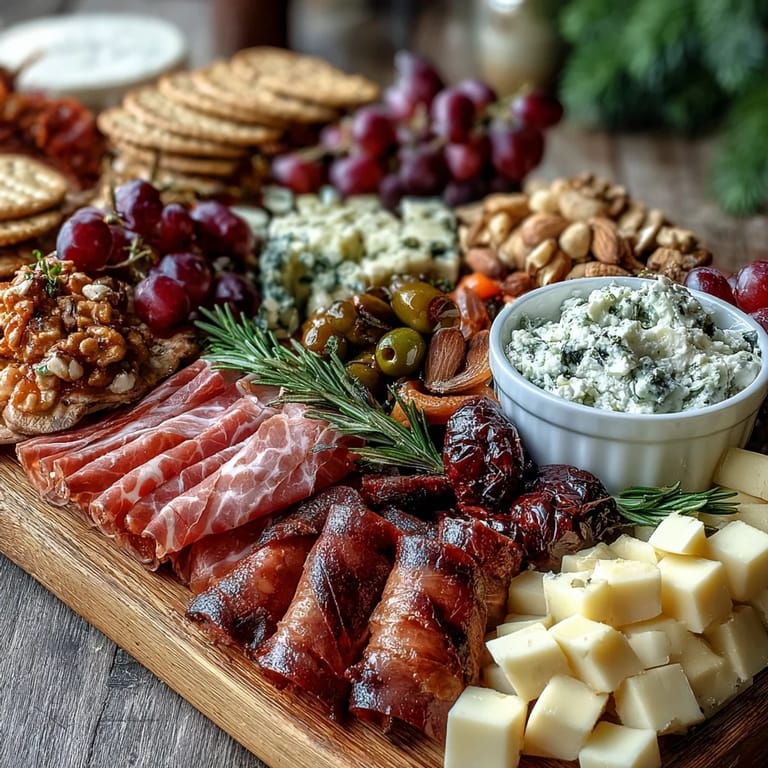
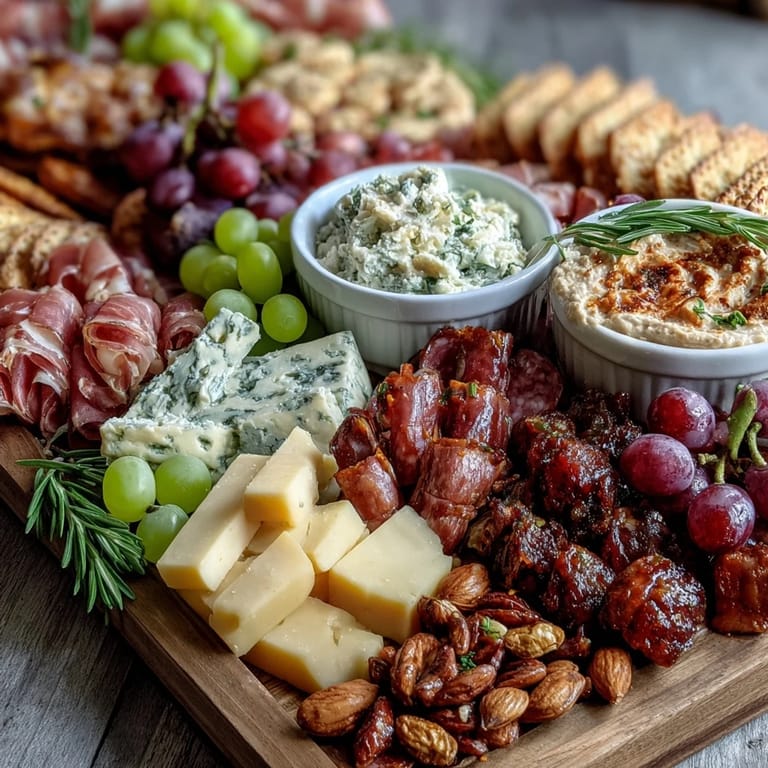
- Loosely fold or roll each type of cured meat, clustering them in separate sections rather than mixing them together. The folds catch light and create height variation that makes the board visually interesting.
- Position cheeses intentionally:
- Space cheeses evenly so guests can access each variety without climbing over others; softer cheeses like brie should be near the edge for easy cutting. Leave a little breathing room so the board doesn't feel cramped.
- Nestle dips into position:
- Spoon each dip into a small bowl and arrange them so they're surrounded by their ideal accompaniments—hummus near vegetables, roasted pepper dip near both crackers and meat, tzatziki everywhere. This guides guests without feeling bossy.
- Fan out your carbs:
- Arrange crackers, baguette slices, and breadsticks in little sections so they look abundant without creating a monotonous bread pile. Overlap them slightly like you're making a visual statement.
- Fill the gaps strategically:
- Tuck grapes, cherry tomatoes, cucumber slices, bell pepper, and carrots into empty spaces, arranging them in small clusters rather than scattered randomness. This creates rhythm and makes each guest pause to discover flavors.
- Scatter the finishing touches:
- Distribute nuts, olives, dried apricots, and figs in little groups around the board; these aren't accidents filling blank spots, they're delightful surprises. Step back and look for any section that feels heavy or empty, then balance it.
- Crown it with freshness:
- Break small sprigs of rosemary and thyme and tuck them throughout the board just before serving. They add aroma, color, and signal to guests that everything here is fresh and intentional.
- Serve with confidence:
- Place the board where guests can reach from multiple sides and keep smaller plates nearby so people can actually gather food without balancing everything in their hands. Replenish dips and anything eaten quickly—the board should look abundant throughout the party.
 Save
Save An hour into the party, I noticed someone building a tiny masterpiece on their plate—prosciutto wrapped around gouda, hummus underneath, rosemary on top—and realized they weren't just eating. They were playing, experimenting, discovering their own favorite combinations. That's when a charcuterie board stops being appetizer and becomes entertainment.
The Architecture of Balance
A good board isn't random—it's a conversation between flavors and textures speaking to each other. Your salty meats need something creamy (hello, brie), something fresh (grapes, cucumbers), and something acidic (olives, the dips) to feel complete. I learned this after my first board felt monotone despite having "everything." Now I taste as I build, making sure no section reads as repetitive.
Timing and Temperature Secrets
Room temperature is the enemy of charcuterie boards, especially in warm weather. Everything starts tasting better and lasting longer when the board itself is cold and you only bring items out 30 minutes before guests arrive. I've started building boards in stages—sturdy items first (nuts, crackers, harder cheeses), then softer things and dips last—so textures stay true to themselves. One summer party taught me that vegetables sweating on a warm board make the whole thing feel tired by the end, no matter how beautiful it looked at the start.
Customization Without Overthinking
The beauty of a charcuterie board is that it adapts to what you have and who's coming. Vegetarian guests? Build a section heavy on cheeses, nuts, and produce where meat would be, and suddenly they're not eating around something—they're exploring their own territory. Gluten-free friends? Swap crackers for rice cakes or vegetables; no one loses out. I've made this board with different meats based on what the butcher had that day, swapped cheeses because of sales, and it's never been worse for it.
- Quality matters more than quantity—buy less of excellent ingredients rather than more of mediocre ones.
- Prep vegetables earlier in the day and store them in water to keep them crisp until board assembly time.
- If you make your own dips instead of buying them, people will taste the difference and comment on it for months.
 Save
Save This board isn't about impressing people with complexity—it's about creating a moment where everyone feels welcome and finds something that speaks to them. That's all a good housewarming needs.
Recipe FAQs
- → How should the meats be prepared for the board?
Arrange cured meats such as prosciutto, salami, and chorizo in loose folds or rolled slices for easy picking and an appealing look.
- → Which types of cheeses complement the selection?
Include a mix of soft and firm cheeses like brie, aged cheddar, gouda, and crumbled blue cheese for varied flavors and textures.
- → What dips work well with this assortment?
Offers creamy, flavorful dips such as hummus, tzatziki, and roasted red pepper dip to balance the savory elements.
- → How can I accommodate dietary restrictions?
Substitute gluten-free crackers for guests with sensitivities, and swap or omit certain meats or cheeses based on preferences.
- → What garnishes enhance the presentation?
Fresh herbs like rosemary and thyme scattered throughout bring color and aroma, enhancing the board's visual appeal.
- → How should I serve the board for best results?
Serve immediately after arranging, replenishing dips and crackers as needed to keep everything fresh and inviting.